
No period published by Québec.ca
Québec.ca publishes no hunting or trapping period for this species. Check the official regulations.
Wikipedia
Aigle royal
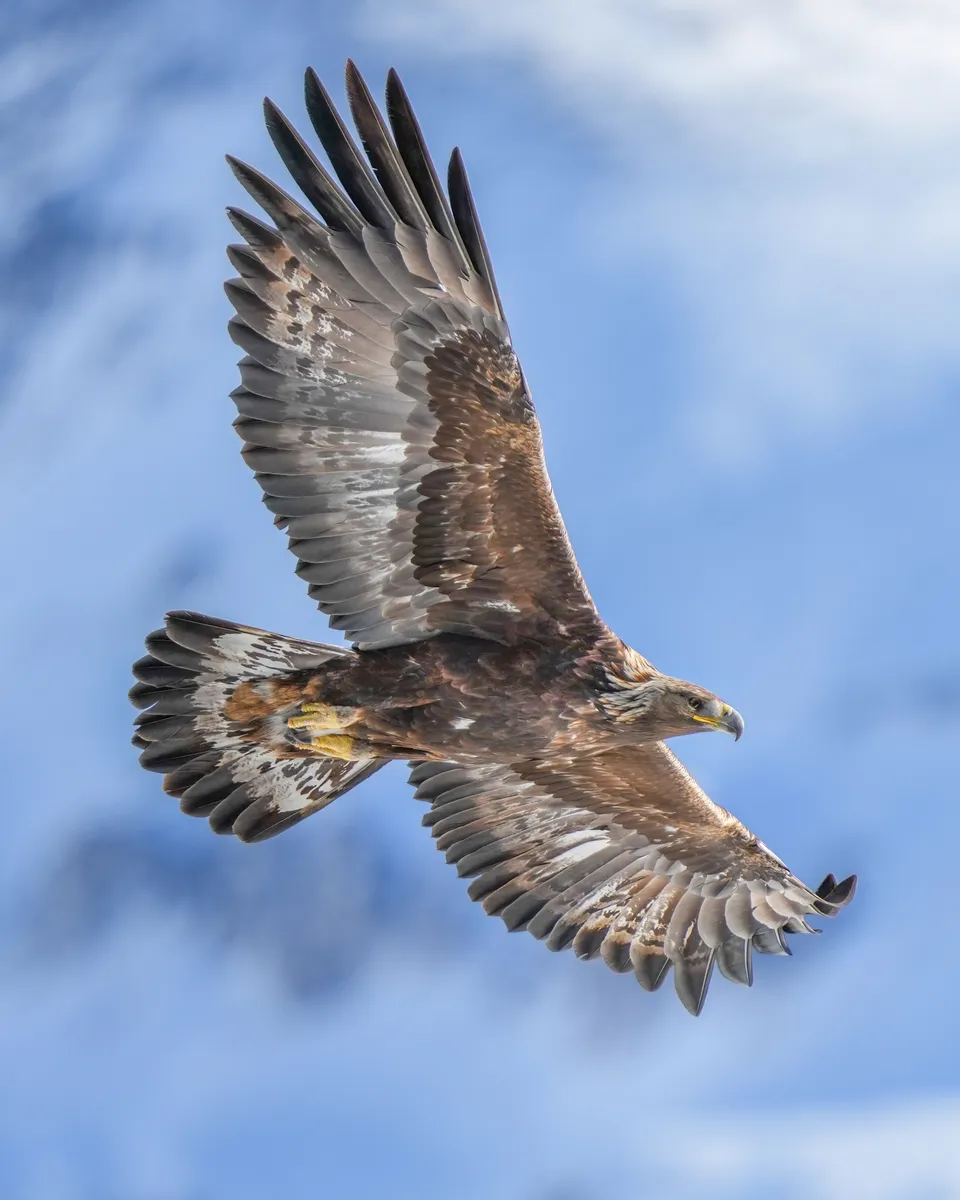
The golden eagle (Aquila chrysaetos) is a bird of prey living in the Northern Hemisphere. It is the most widely distributed species of eagle. Like all eagles, it belongs to the family Accipitridae. They are one of the best-known birds of prey in the Northern Hemisphere. These birds are dark brown, with lighter golden-brown plumage on their napes. Immature eagles of this species typically have white on the tail and often have white markings on the wings. Golden eagles maintain home ranges or territories that may be as large as 200 km2 (77 sq mi). They build large nests in cliffs and other high places to which they may return for several breeding years. Most breeding activities take place in the spring; they are monogamous and may remain together for several years or possibly for life. Females lay up to four eggs, and then incubate them for six weeks. Typically, one or two young survive to fledge in about three months. These juvenile golden eagles usually attain full independence in the fall, after which they wander widely until establishing a territory for themselves in four to five years. Once widespread across the Holarctic, it has disappeared from many areas that are heavily populated by humans. Despite being extirpated from or uncommon in some of its former range, the species is still widespread, being present in sizeable stretches of Eurasia, North America, and parts of North Africa. It is the largest and least populous of the five species of true accipitrid to occur as a breeding species in both the Palearctic and the Nearctic. For centuries, this species has been one of the most highly regarded birds used in falconry. It is one of the most extensively studied species of raptor in the world in some parts of its range, such as the Western United States and the Western Palearctic.
Diet
A fully-grown golden eagle requires about 230 to 250 g (8.1 to 8.8 oz) of food per day but in the life of most eagles there are cycles of feast and famine, and eagles have been known to go without food for up to a week and then gorge on up to 900 g (2.0 lb) at one sitting. The diet of golden eagles is composed primarily of small mammals such as rabbits, hares, ground squirrels, prairie dogs, and marmots. They also eat other birds (usually of medium size, such as gamebirds), reptiles, and fish in smaller numbers. Golden eagles occasionally capture large prey, including seals, ungulates, coyotes, and badgers. They have also been known to capture large flying birds such as geese or cranes, as well as other raptors, including owls and falcons.
Reproduction
Golden eagles usually mate for life. A breeding pair is formed in a courtship display.This courtship includes undulating displays by both in the pair, with the male bird picking up a piece of rock or a small stick, and dropping it only to enter into a
Text from Wikipedia — Golden eagle, revision 1373000521, CC BY-SA 4.0, retrieved 2026-09-04. Encyclopedic text reused under CC BY-SA 4.0. Sentences about hunting or regulation are removed: on this site, the rule comes from Québec.ca.
Other names
French
English
Presence in Quebec
- Origin
- Indigène
- Occurrence
- Régulier
- Population status
- Reproducteur
- Certainty
- Confirmé
Conservation
Québec.ca
Official periods
Source: Québec.ca — tables reproduced as published (retrieved 2026-08-30).
Regulations change. Always check Québec.ca before hunting or trapping.
Where this data comes from
This species is listed in an official government dataset. The identification and status shown in the data sheet are reproduced from it.
Source: List of Quebec’s vertebrate wildlife (LFVQ) — Ministère de l’Environnement, de la Lutte contre les changements climatiques, de la Faune et des Parcs. File LFVQ_25_03_2026.csv, retrieved 2026-08-30 · CC BY 4.0.
Measurements, habitat, diet and reproduction are not shown: no official source is attached to them yet.