
No period published by Québec.ca
Québec.ca publishes no hunting or trapping period for this species. Check the official regulations.
Wikipedia
Aigrette neigeuse
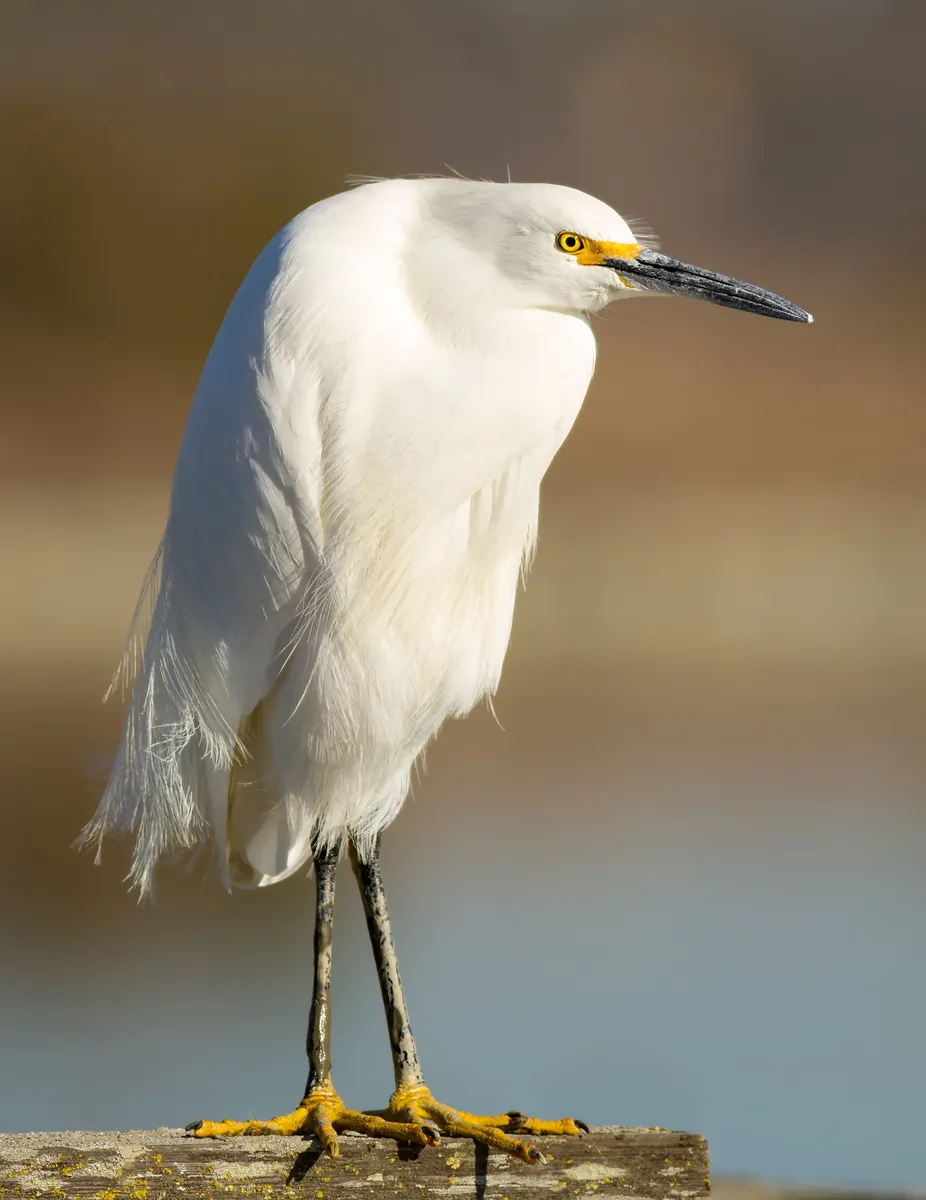
The snowy egret (Egretta thula) is a small white heron. The genus name comes from Provençal French for the little egret, aigrette, which is a diminutive of aigron, 'heron'. The species name thula is the Mapudungun term for the black-necked swan, applied to this species in error by Chilean naturalist Juan Ignacio Molina in 1782. The snowy egret is the American counterpart to the very similar Old World little egret, which has become established in the Bahamas. At one time, the plumes of the snowy egret were in great demand as decorations for women's hats. Now protected in the United States by law, under the Migratory Bird Treaty Act, this bird's population has rebounded.
Description
Adult snowy egrets are entirely white apart from the yellow lores between the long black bill and the eye, black legs, and bright yellow feet. The nape and neck bear long, shaggy plumes known as aigrettes. Immature snowy egrets have duller, greenish legs. Measurements: Length: 22.1–26.0 in (56–66 cm) Weight: 13.1 oz (370 g) Wingspan: 39.4 inches (100 cm)
Diet
The birds eat fish, crustaceans (such as crabs, shrimp and crayfish), insects, small reptiles (such as lizards and snakes), snails, frogs, toads and worms (especially earthworms and other annelids). They stalk prey in shallow water, often running or shuffling their feet, flushing prey into view by swaying their heads, flicking their wings or vibrating their bills. They may also hover, or "dip-fish" by flying with their feet just above the water surface. They sometimes forage in mixed species groups.
Reproduction
Snowy egrets breed in mixed colonies, which may include great egrets, night herons, tricolored herons, little blue herons, cattle egrets, glossy ibises and roseate spoonbills. The male establishes a territory and starts building the nest in a tree, vines or thick undergrowth. He then attracts a mate with an elaborate courtship display which includes dipping up and down, bill raising, aerial displays, diving, tumbling and calling. The immediate vicinity of the nest is defended from other birds and the female finishes the construction of the nest with materials brought by the male. It is constructed from twigs, rushes, sedges, grasses, Spanish moss and similar materials and may be 15 in (38 cm) across. Up to six pale bluish-green eggs are laid which hatch after about 24 days. The young are altricial and covered with white down when first hatched. They leave the nest after about 22 days.
Text from Wikipedia — Snowy egret, revision 1357785659, CC BY-SA 4.0, retrieved 2026-09-04. Encyclopedic text reused under CC BY-SA 4.0. Sentences about hunting or regulation are removed: on this site, the rule comes from Québec.ca.
Other names
French
English
Presence in Quebec
- Origin
- Indigène
- Occurrence
- Régulier
- Population status
- Migrateur
- Certainty
- Confirmé
Conservation
Québec.ca
Official periods
Source: Québec.ca — tables reproduced as published (retrieved 2026-08-30).
Regulations change. Always check Québec.ca before hunting or trapping.
Where this data comes from
This species is listed in an official government dataset. The identification and status shown in the data sheet are reproduced from it.
Source: List of Quebec’s vertebrate wildlife (LFVQ) — Ministère de l’Environnement, de la Lutte contre les changements climatiques, de la Faune et des Parcs. File LFVQ_25_03_2026.csv, retrieved 2026-08-30 · CC BY 4.0.
Measurements, habitat, diet and reproduction are not shown: no official source is attached to them yet.