
No period published by Québec.ca
Québec.ca publishes no hunting or trapping period for this species. Check the official regulations.
Wikipedia
Aigrette tricolore
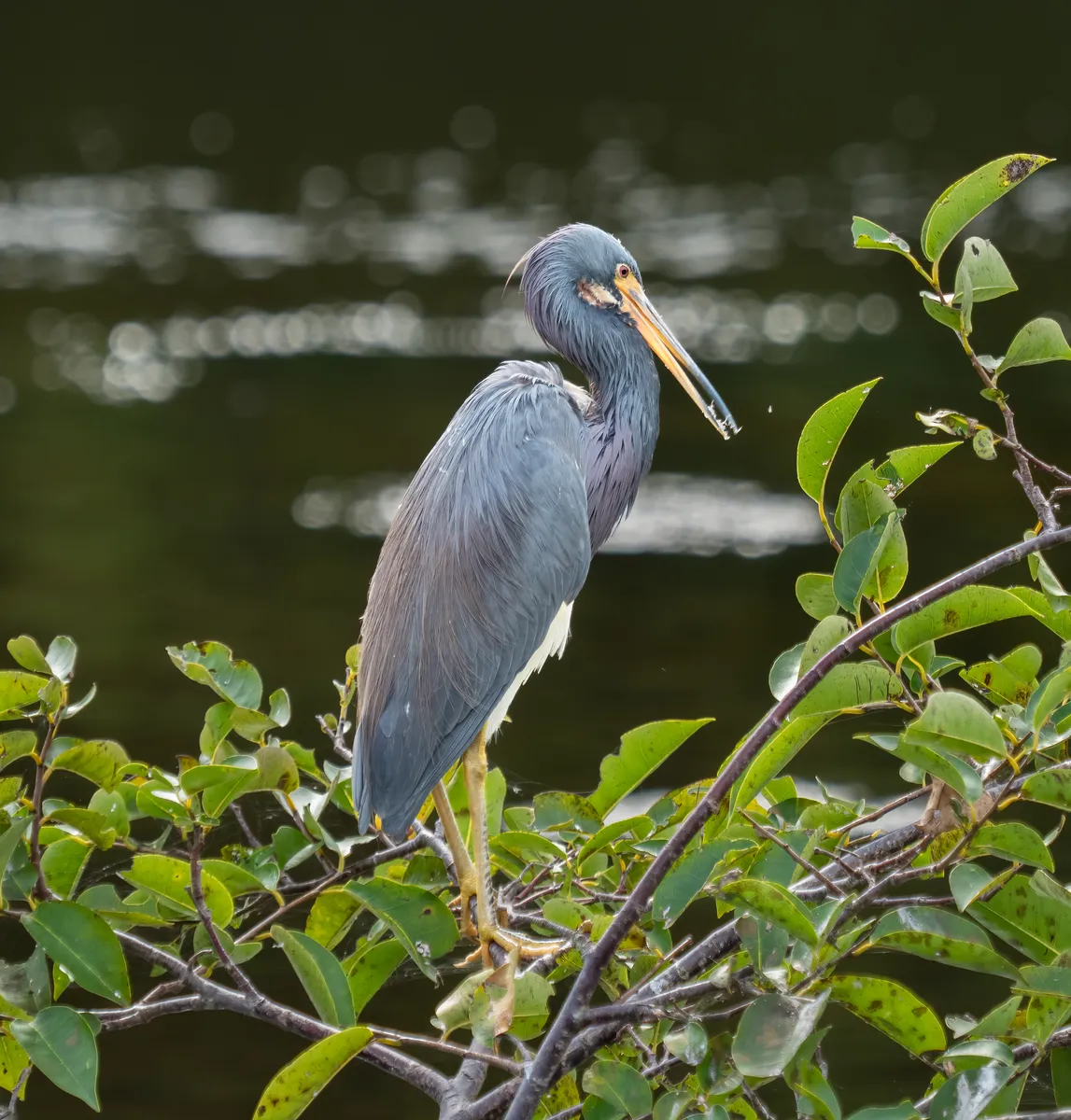
The tricolored heron (Egretta tricolor), formerly known as the Louisiana heron, is a small species of heron native to coastal parts of the Americas. The species is more solitary than other species of heron in the Americas and eats a diet consisting mostly of small fish.
Description
This species measures from 56 to 76 cm (22 to 30 in) long and has a typical wingspan of 96 cm (38 in). The slightly larger male heron weighs 415 g (14.6 oz) on average, while the female averages 334 g (11.8 oz). It is a medium-large, long-legged, long-necked heron with a long, pointed, yellowish or greyish bill with a black tip. In breeding plumage, some individuals will develop a stark bicolored bill which is blue and black at the tip. Its legs and feet turn from dark yellow in nonbreeding birds to pink in breeding adults. The plumage of the triclolored heron changes dramatically from its juvenile form to its adult form. Adults have a blue-grey head, neck, back, and upper wings, with a white line along the neck. The belly is white. In breeding plumage, they have long, blue, filamentous plumes on their heads and necks, and buff ones on their backs.
Text from Wikipedia — Tricolored heron, revision 1322507633, CC BY-SA 4.0, retrieved 2026-09-04. Encyclopedic text reused under CC BY-SA 4.0. Sentences about hunting or regulation are removed: on this site, the rule comes from Québec.ca.
Other names
French
English
Presence in Quebec
- Origin
- Indigène
- Occurrence
- Accidentel/non régulier
- Population status
- Migrateur
- Certainty
- Confirmé
Conservation
Québec.ca
Official periods
Source: Québec.ca — tables reproduced as published (retrieved 2026-08-30).
Regulations change. Always check Québec.ca before hunting or trapping.
Where this data comes from
This species is listed in an official government dataset. The identification and status shown in the data sheet are reproduced from it.
Source: List of Quebec’s vertebrate wildlife (LFVQ) — Ministère de l’Environnement, de la Lutte contre les changements climatiques, de la Faune et des Parcs. File LFVQ_25_03_2026.csv, retrieved 2026-08-30 · CC BY 4.0.
Measurements, habitat, diet and reproduction are not shown: no official source is attached to them yet.