
Trapping periods published by Québec.ca
Official tables below — trapping units (UGAF) and dates.
Wikipedia
Belette pygmée
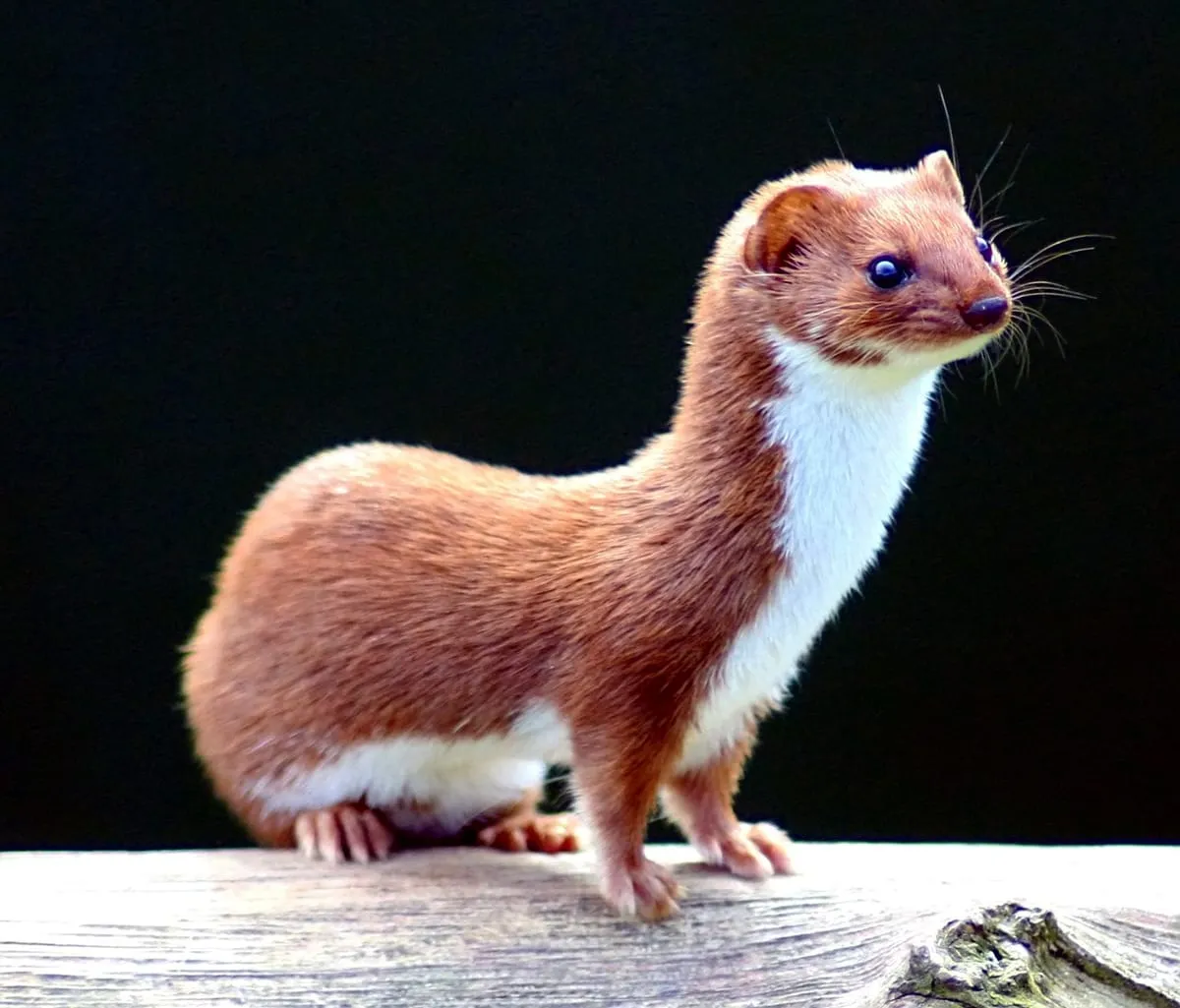
The least weasel (Mustela nivalis), little weasel, common weasel, or simply weasel is the smallest member of the genus Mustela, family Mustelidae and order Carnivora. It is native to Eurasia, North America and North Africa, and has been introduced to New Zealand, Malta, Crete, the Azores, and São Tomé. It is classified as least concern by the IUCN, due to its wide distribution and large population throughout the Northern Hemisphere. Eighteen subspecies are recognised. The least weasel varies greatly in size over its range. The body is slender and elongated, and the legs and tail are relatively short. The colour varies geographically, as does the pelage type and length of tail. The dorsal surface, flanks, limbs and tail of the animal are usually some shade of brown while the underparts are white. The line delineating the boundary between the two colours is usually straight. At high altitudes and in the northern part of its range, the coat becomes pure white in winter. Small rodents form the largest part of the least weasel's diet, but it also kills and eats rabbits, other mammals, and occasionally birds, birds' eggs, fish and frogs. Males mark their territories with olfactory signals and have exclusive home ranges which may intersect with or include several female ranges. Least weasels use pre-existing holes to sleep, store food and raise their young. Breeding takes place in the spring and summer, and there is a single litter of about six kits which are reared exclusively by the female. Due to its small size and fierce nature, the least weasel plays an important part in the mythology and legend of various cultures.
Description
The least weasel has a thin, greatly elongated and extremely flexible body with a small, yet elongated, blunt-muzzled head which is no thicker than the neck. The eyes are small in relation to their head size and are bulging and dark colored. The legs and tail are relatively short, the latter constituting less than half the body length. The feet have sharp, dark-coloured claws, and the soles are heavily haired. The skull, especially that of the small rixosa group, has an infantile appearance when compared with that of other members of the genus Mustela (in particular, the stoat and kolonok). This is expressed in the relatively large size of the cranium and shortened facial region. The skull is, overall, similar to that of the stoat, but smaller, though the skulls of large male weasels tend to overlap in size with those of small female stoats. There are usually four pairs of nipples but these are only visible in females. The baculum is short, 16 to 20 mm (0.63 to 0.79 in), with a thick, straight shaft. Fat is deposited along the spine, kidneys, gut mesentries and around the limbs. The least weasel has muscular anal glands under the tail, which measure 7 by 5 mm (0.28 by 0.20 in), and contain sulphurous volatiles, including thietanes and dithiacyclopentanes.
Text from Wikipedia — Least weasel, revision 1373046760, CC BY-SA 4.0, retrieved 2026-09-04. Encyclopedic text reused under CC BY-SA 4.0. Sentences about hunting or regulation are removed: on this site, the rule comes from Québec.ca.
Other names
French
Presence in Quebec
- Origin
- Indigène
- Occurrence
- Régulier
- Population status
- Toute l'année
- Certainty
- Confirmé
Conservation
Québec.ca
Official periods
Source: Québec.ca — tables reproduced as published (retrieved 2026-08-30).
Trapping
Long-tailed weasel, least weasel, Eastern grey squirrel, red squirrel, ermine, American marten and fisher
| UGAF | Periods |
|---|---|
| 1, 2, 3, 4, 5, 6, 7, 11, 13, 17, 31, 32, 39, 41, 42, 43, 44, 45, 46, 47, 48, 49, 50, 51, 52, 53 | From October 18 to March 1 |
| 8, 9, 10, 12, 14, 15, 18, 19, 20, 21, 22, 23, 26, 27, 28, 29, 30, 33, 34, 35, 36, 37, 38, 40 | From October 25 to February 15 |
| 16, 70, 71, 72, 73, 74, 75, 76, 77, 78, 79, 80, 81, 82 | From October 25 to February 1 |
| 24, 25, 83, 84, 85, 86 | From October 25 to March 1 |
| 54, 55, 56, 57, 58, 59, 60, 61, 62, 63, 64, 65, 66 | From October 18 to March 15 |
Regulations change. Always check Québec.ca before hunting or trapping.
Where this data comes from
This species is listed in an official government dataset. The identification and status shown in the data sheet are reproduced from it.
Source: List of Quebec’s vertebrate wildlife (LFVQ) — Ministère de l’Environnement, de la Lutte contre les changements climatiques, de la Faune et des Parcs. File LFVQ_25_03_2026.csv, retrieved 2026-08-30 · CC BY 4.0.
Measurements, habitat, diet and reproduction are not shown: no official source is attached to them yet.