
No period published by Québec.ca
Québec.ca publishes no hunting or trapping period for this species. Check the official regulations.
Wikipedia
Campagnol des champs
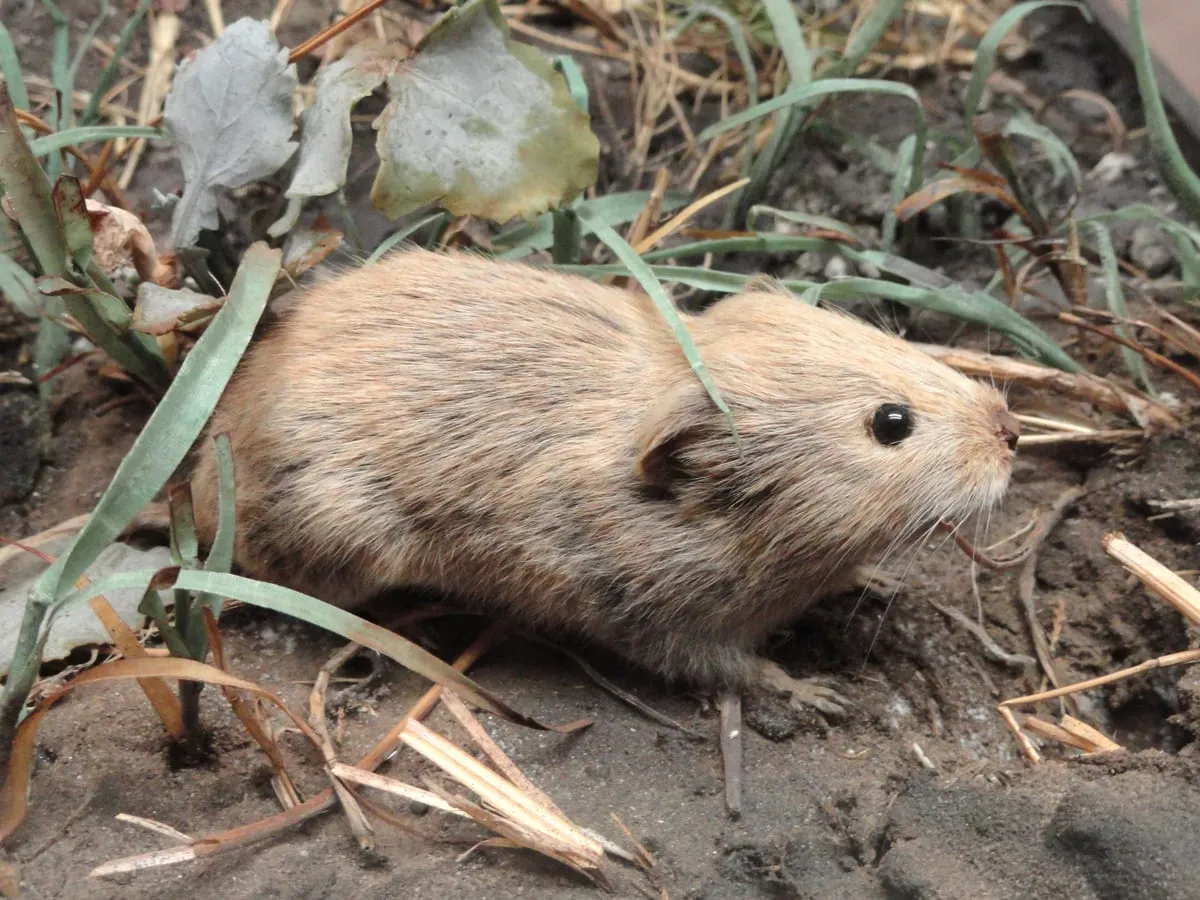
The eastern meadow vole (Microtus pennsylvanicus), sometimes called the field mouse or meadow mouse, is a North American vole found in eastern Canada and the United States. Its range extends farther south along the Atlantic coast. The western meadow vole, Florida salt marsh vole, and beach vole were formerly considered regional variants or subspecies of M. pennsylvanicus, but have all since been designated as distinct species. The eastern meadow vole is active year-round, usually at night. It also digs burrows, where it stores food for the winter and females give birth to their young. Although these animals tend to live close together, they are aggressive towards one another. This is particularly evident in males during the breeding season. They can cause damage to fruit trees, garden plants, and commercial grain crops.
Habitat and range
The eastern meadow vole is found throughout eastern North America. It ranges from Labrador and New Brunswick south to South Carolina and extreme northeastern Georgia; west through Tennessee to Ohio. West of Ohio, it is replaced by the western meadow vole. Several subspecies are found on eastern islands, including the beach vole (M. p. breweri) and the extinct Gull Island vole.
Reproduction
Gestation lasts 20 to 23 days. Neonates are pink and hairless, with closed eyes and ears. Fur begins to appear by three days, and young are completely furred except for the belly by seven days. Eyes and ears open by eight days. Weaning occurs from 12 to 14 days. Young born in spring and early summer attain adult weight in 12 weeks, but undergo a fall weight loss. Young born in late summer continue growing through the fall and maintain their weight through the winter. Maximum size is reached between two and 10 months. Typical eastern meadow vole litters consist of four to six young, with extremes of one and 11 young. On average, 2.6 young are successfully weaned per litter. Litter size is not significantly correlated with latitude, elevation, or population density. Fall, winter, and spring litters tend to be smaller than summer litters. Litter size was positively correlated with body size, and is not significantly different in primiparous and multiparous females. Primiparous females had fewer young per litter than multiparous females. Litter size was constant in summer breeding periods at different population densities. Female eastern meadow voles reach reproductive maturity earlier than males; some ovulate and become pregnant as early as three weeks old. Males are usually six to eight weeks old before mature sperm are produced. One captive female produced 17 litters in one year for a total of 83 young. One of her young produced 13 litters (totalling 78 young) before she was a year old. Patterns of mortality apparently vary among eastern meadow vole populations. The average eastern meadow vole lifespan is less than one month because of high nestling and juvenile mortality.
Text from Wikipedia — Eastern meadow vole, revision 1347283021, CC BY-SA 4.0, retrieved 2026-09-04. Encyclopedic text reused under CC BY-SA 4.0. Sentences about hunting or regulation are removed: on this site, the rule comes from Québec.ca.
Other names
French
Presence in Quebec
- Origin
- Indigène
- Occurrence
- Régulier
- Population status
- Toute l'année
- Certainty
- Confirmé
Conservation
Québec.ca
Official periods
Source: Québec.ca — tables reproduced as published (retrieved 2026-08-30).
Regulations change. Always check Québec.ca before hunting or trapping.
Where this data comes from
This species is listed in an official government dataset. The identification and status shown in the data sheet are reproduced from it.
Source: List of Quebec’s vertebrate wildlife (LFVQ) — Ministère de l’Environnement, de la Lutte contre les changements climatiques, de la Faune et des Parcs. File LFVQ_25_03_2026.csv, retrieved 2026-08-30 · CC BY 4.0.
Measurements, habitat, diet and reproduction are not shown: no official source is attached to them yet.