
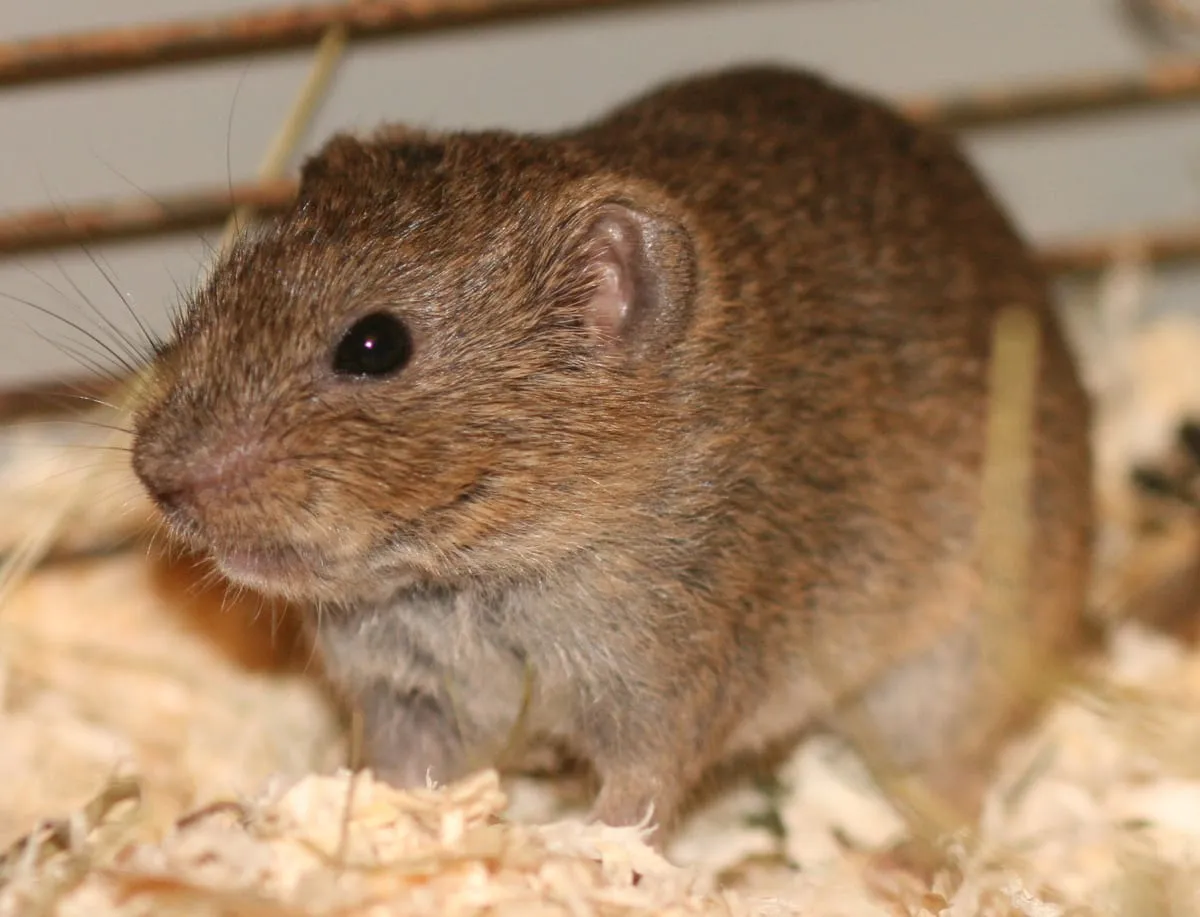
Campagnol-lemming de Cooper— Quebec wildlife
Synaptomys cooperi
CricetidaeNo period published by Québec.ca
Québec.ca publishes no hunting or trapping period for this species. Check the official regulations.
Wikipedia
Campagnol-lemming de Cooper
The southern bog lemming (Synaptomys cooperi) is a small North American lemming. Its range overlaps with the other species in genus Synaptomys, the northern bog lemming, in southeastern Canada, but extends farther south.
Description
Southern bog lemmings are covered with thick, brownish fur on their backs that ranges in color from reddish to dark brown and have a grizzled appearance. The belly is silver-gray. The shallow-grooved upper incisors and a relatively shorter tail distinguish this species from other rodents. They have relatively large heads and small eyes. The ears barely show through puffy head fur. Southern bog lemmings have four toes and one small, nailed thumb on the forefeet and five toes on the hind feet. Females have six teats, which distinguishes this species from its closest relative, northern bog lemmings, which have eight. They have a large head, short legs, and a short tail which is lighter underneath. Their upper incisors are grooved. They are 13 cm (5.1 in) long with a 2 cm (0.79 in) tail and weigh about 35 g (1.2 oz).
Reproduction
Breeding can occur during any time of the year if food is plentiful. The gestation period is 21–23 days. At birth, the pups are blind and without fur. They also have claws at birth. By the end of their first week, young are well furred. They open their eyes at about 12 days of age. They are weaned at 3 weeks. Male southern bog lemmings reach sexual maturity in 5 weeks. Most individuals breed before they reach their maximum size.
Text from Wikipedia — Southern bog lemming, revision 1323299429, CC BY-SA 4.0, retrieved 2026-09-04. Encyclopedic text reused under CC BY-SA 4.0. Sentences about hunting or regulation are removed: on this site, the rule comes from Québec.ca.
Other names
French
English
Presence in Quebec
- Origin
- Indigène
- Occurrence
- Régulier
- Population status
- Toute l'année
- Certainty
- Confirmé
Conservation
Québec.ca
Official periods
Source: Québec.ca — tables reproduced as published (retrieved 2026-08-30).
Regulations change. Always check Québec.ca before hunting or trapping.
Where this data comes from
This species is listed in an official government dataset. The identification and status shown in the data sheet are reproduced from it.
Source: List of Quebec’s vertebrate wildlife (LFVQ) — Ministère de l’Environnement, de la Lutte contre les changements climatiques, de la Faune et des Parcs. File LFVQ_25_03_2026.csv, retrieved 2026-08-30 · CC BY 4.0.
Measurements, habitat, diet and reproduction are not shown: no official source is attached to them yet.