
Trapping periods published by Québec.ca
Official tables below — trapping units (UGAF) and dates.
Wikipedia
Castor
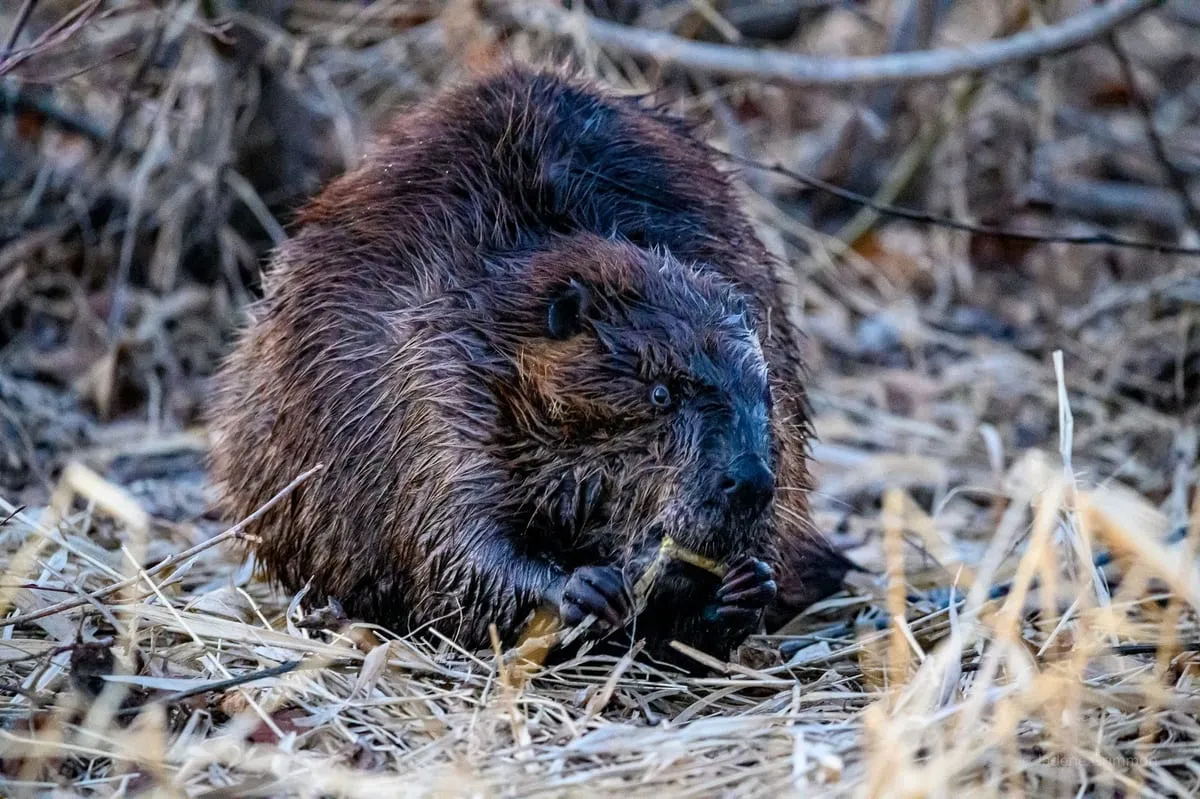
The North American beaver (Castor canadensis) is one of two extant beaver species, along with the Eurasian beaver (Castor fiber). It is native to North America and has been introduced in South America (Patagonia) and Europe (primarily Finland and Karelia). The North American beaver is one of the national symbols of Canada and the official state mammal of Oregon and New York. North American beavers are widespread across the continental United States, Canada, southern Alaska, and some parts of northern Mexico. In Canada and the United States, the North American beaver is often referred to simply as "beaver", although this can cause some confusion because another distantly related rodent, Aplodontia rufa, is often called the "mountain beaver". Other vernacular names, including American beaver and Canadian beaver, distinguish this species from the other extant beaver species, Castor fiber, which is native to Eurasia.
Description
The beaver is the largest rodent in North America and competes with its Eurasian counterpart, the European beaver, for being the third-largest in the world, both following the South American capybara and lesser capybara. The European species is slightly larger on average but the American has a larger known maximum size. Adults usually weigh from 11 to 32 kg (24 to 71 lb), with 20 kg (44 lb) being typical. In New York, the average weight of adult male beavers was 18.9 kg (42 lb), while non-native females in Finland averaged 18.1 kg (40 lb). However, adults of both sexes averaged 16.8 kg (37 lb) in Ohio. The species seems to conform to Bergmann's rule, as northern animals appear to be larger. In the Northwest Territory, adults weighed a median of 20.5 kg (45 lb). The American beaver is slightly smaller in average body mass than the Eurasian species. The head-and-body length of adult North American beavers is 74–90 cm (29–35 in), with the tail adding a further 20–35 cm (7.9–13.8 in). Very old individuals can exceptionally exceed normal sizes, weighing more than 40 kg (88 lb) or even as much as 50 kg (110 lb). The beavers are semiaquatic with physical traits suited to this lifestyle. It has a large, scaly, paddle-shaped tail and webbed hind feet. The unwebbed front feet are smaller, have claws, and are highly dexterous. Beavers use their front feet for digging, to feed themselves, and to maneuver small stems as they gnaw bark off trees. The eyes are covered by a nictitating membrane which allows the beaver to see underwater. The nostrils and ears are sealed while submerged. Their lips can be closed behind their front teeth so that they can continue to gnaw underwater. A thick layer of fat under its skin provides insulation. The beaver's fur consists of long, coarse outer hairs and short, fine inner hairs, and is usually dark brown. Scent glands near the genitals secrete an oily substance known as castoreum, which the beaver uses to waterproof its fur.
Habitat and range
Beavers were practically ubiquitous and lived from south of the arctic tundra to the deserts
Text from Wikipedia — North American beaver, revision 1371486127, CC BY-SA 4.0, retrieved 2026-09-04. Encyclopedic text reused under CC BY-SA 4.0. Sentences about hunting or regulation are removed: on this site, the rule comes from Québec.ca.
Other names
French
Presence in Quebec
- Origin
- Indigène
- Occurrence
- Régulier
- Population status
- Toute l'année
- Certainty
- Confirmé
Conservation
Québec.ca
Official periods
Source: Québec.ca — tables reproduced as published (retrieved 2026-08-30).
Trapping
Beaver and North American river otter
| UGAF | Periods |
|---|---|
| 1, 2, 3, 4, 5, 6, 7, 8, 9, 10, 11, 12, 13, 14, 15, 17, 18, 19, 20, 21, 22, 23, 26, 27, 28, 29, 30, 31, 32, 33, 34, 35, 36, 37, 38, 39, 40, 41, 42, 43, 44, 45, 46, 47, 48, 49, 50, 51, 52, 53, 54, 55, 56, 57, 58, 59, 60, 61, 62, 63, 64, 65, 66, 68 | From October 18 to March 22 |
| 16, 24, 25,70, 71, 72, 73, 74, 75, 76, 77, 78, 79, 80, 81, 82, 83, 84, 85, 86 | From October 25 to March 15 |
Regulations change. Always check Québec.ca before hunting or trapping.
On this site
Related articles
Where this data comes from
This species is listed in an official government dataset. The identification and status shown in the data sheet are reproduced from it.
Source: List of Quebec’s vertebrate wildlife (LFVQ) — Ministère de l’Environnement, de la Lutte contre les changements climatiques, de la Faune et des Parcs. File LFVQ_25_03_2026.csv, retrieved 2026-08-30 · CC BY 4.0.
Measurements, habitat, diet and reproduction are not shown: no official source is attached to them yet.