
No period published by Québec.ca
Québec.ca publishes no hunting or trapping period for this species. Check the official regulations.
Wikipedia
Cygne trompette
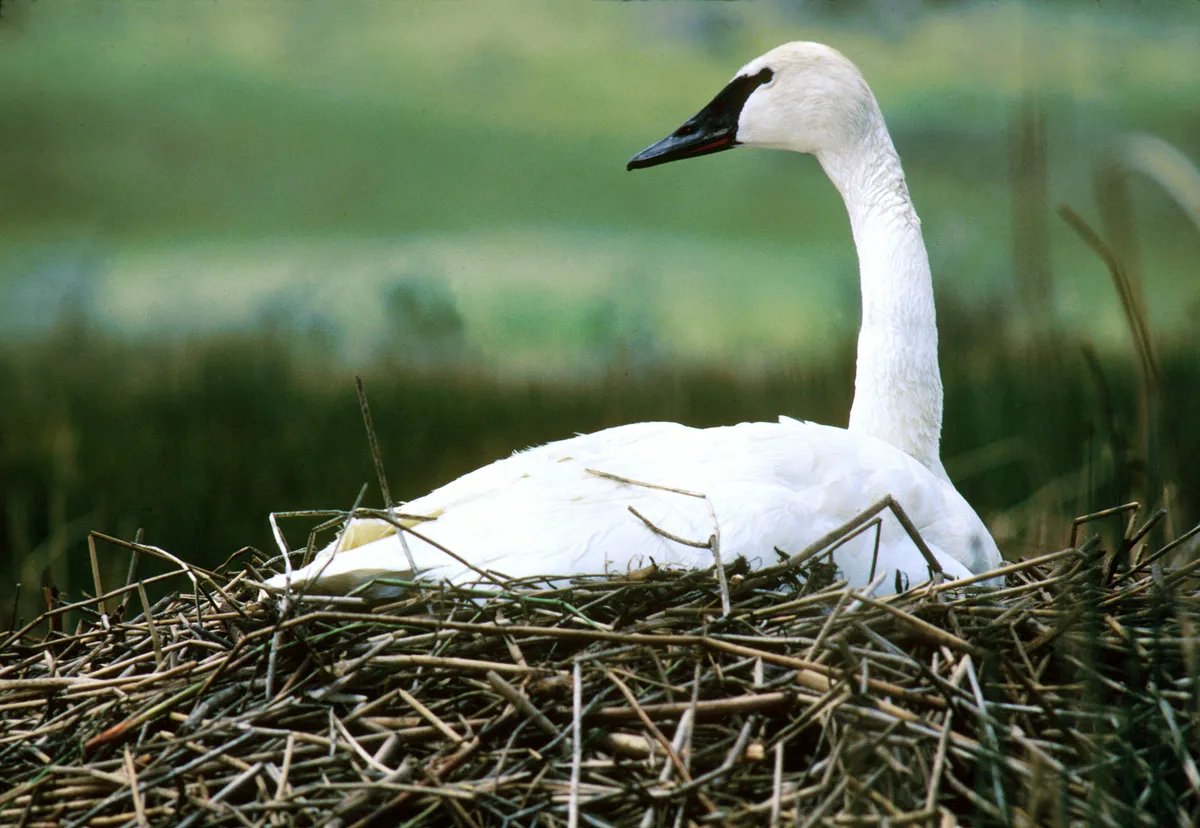
The trumpeter swan (Cygnus buccinator), or simply the trumpeter, is a species of swan found in North America. The heaviest living bird native to North America, it is also the largest extant species of waterfowl, with a wingspan of 185 to 304.8 cm (6 ft 2 in to 10 ft 2 in). It is the American counterpart and a close relative of the whooper swan (Cygnus cygnus) of Eurasia and has even been considered the same species by some authorities. By 1933, fewer than 70 wild individuals were known to exist; extinction seemed imminent until aerial surveys discovered a Pacific population of several thousand trumpeter swans around Alaska's Copper River. Careful reintroductions by wildlife agencies and the Trumpeter Swan Society gradually restored the North American wild population to over 46,000 birds by 2010.
Description
The trumpeter swan is the largest extant species of waterfowl, and both the heaviest and longest native bird of North America. Adults usually measure 138–165 cm (4 ft 6 in – 5 ft 5 in) long, though large males can exceed 180 cm (5 ft 11 in) in total length. The weight of adult birds is typically 7–13.6 kg (15–30 lb). Possibly due to seasonal variation based on food access and variability due to age, average weights in males have been reported to range from 10.9 to 12.7 kg (24 to 28 lb) and from 9.4 to 10.3 kg (21 to 23 lb) in females. It is one of the heaviest living animals capable of flight, and, in terms of average mass, the heaviest flying bird in the world. Alongside the mute swan (Cygnus olor), wild turkey (Meleagris gallopavo), great bustard (Otis tarda), Kori bustard (Ardeotis kori), Dalmatian pelican (Pelecanus crispus), and Andean condor (Vultur gryphus), it is one of a handful to weigh in excess of 10 kg (22 lb) between the sexes, and one survey of wintering trumpeters found it averaged second only to the condor in mean mass. The trumpeter swan's wingspan ranges from 185 to 304.8 cm (6 ft 0.8 in to 10 ft 0 in), with the wing chord measuring 60–68 cm (24–27 in). The largest known male trumpeter attained a length of 183 cm (6 ft 0 in), a wingspan of 3.1 m (10 ft 2 in) and a weight of 17.2 kg (38 lb). It is the second heaviest wild waterfowl ever found, as one mute swan was found to weigh a massive 22.5 kg (50 lb), but it was unclear whether the latter swan was still capable of flight because of its bulk. Adult plumage is entirely white. Like mute swan cygnets, trumpeter swan cygnets have light grey plumage and pinkish legs, gaining their white plumage after about a year. As with the whooper swan, this species has an upright posture and generally swims with a straight neck. The trumpeter swan has a large, wedge-shaped black bill that can be minimally lined with salmon-pink coloration around the mouth. The bill measures 10.5–12 cm (4.1–4.7 in), up to twice the length of a Canada goose (Branta canadensis) bill; the trumpeter swan bill is the largest of any waterfowl species in the world.
Text from Wikipedia — Trumpeter swan, revision 1368388250, CC BY-SA 4.0, retrieved 2026-09-04. Encyclopedic text reused under CC BY-SA 4.0. Sentences about hunting or regulation are removed: on this site, the rule comes from Québec.ca.
Other names
English
Presence in Quebec
- Origin
- Indigène
- Occurrence
- Régulier
- Population status
- Reproducteur
- Certainty
- Confirmé
Conservation
Québec.ca
Official periods
Source: Québec.ca — tables reproduced as published (retrieved 2026-08-30).
Regulations change. Always check Québec.ca before hunting or trapping.
Where this data comes from
This species is listed in an official government dataset. The identification and status shown in the data sheet are reproduced from it.
Source: List of Quebec’s vertebrate wildlife (LFVQ) — Ministère de l’Environnement, de la Lutte contre les changements climatiques, de la Faune et des Parcs. File LFVQ_25_03_2026.csv, retrieved 2026-08-30 · CC BY 4.0.
Measurements, habitat, diet and reproduction are not shown: no official source is attached to them yet.