
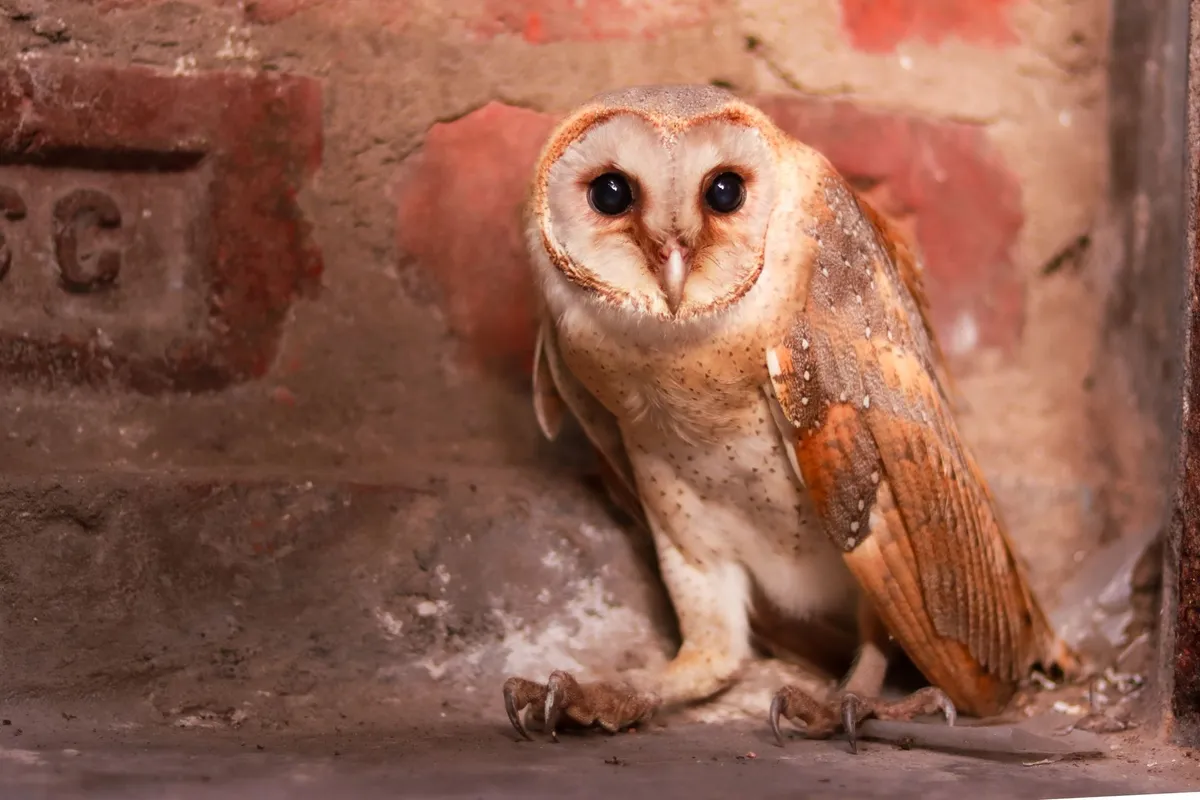
Effraie des clochers, pop. de l'Est— Quebec wildlife
Tyto alba pop. 2
TytonidaeNo period published by Québec.ca
Québec.ca publishes no hunting or trapping period for this species. Check the official regulations.
Overview
Effraie des clochers, pop. de l'Est
The Barn Owl, or Tyto alba, is a medium-sized nocturnal bird, measuring approximately 33 to 39 cm in length and weighing between 250 and 600 grams. Its plumage is particularly distinctive, featuring a heart-shaped white face, a brown and mottled black back, and broad wings that allow it to glide silently. Unlike other owl species, there is no pronounced sexual dimorphism, although females are generally slightly larger than males. Its characteristic call, a soft and plaintive hoot, is often heard on clear nights, adding a mysterious ambiance to the nocturnal landscape.
In Quebec, the Barn Owl is primarily found in agricultural regions and open habitats, such as grasslands, fields, and urban areas. It is often seen near barns, silos, or old buildings, which provide nesting and resting sites. The Montérégie and Laurentians regions are particularly conducive to its presence. Although it can be found in several areas, its habitat is sometimes fragmented, which can impact its distribution.
Behaviorally, the Barn Owl is primarily nocturnal. The breeding season typically begins in spring, with nesting occurring in crevices, attics, or cavities. A female can lay between 2 to 18 eggs, with incubation lasting about 30 to 34 days. The young leave the nest after approximately 8 to 10 weeks but remain dependent on their parents for some time before establishing themselves independently.
Its ecological role is crucial, as it helps regulate rodent populations, which aids in maintaining the balance of agricultural ecosystems. To observe this species, it is recommended to visit rural areas or grasslands during the night, paying attention to its silent flight and calls. Visits to nesting sites and old barns may also provide opportunities for observation.
Other names
French
English
Presence in Quebec
- Origin
- Indigène
- Occurrence
- Accidentel/non régulier
- Population status
- Migrateur
- Certainty
- Confirmé
Conservation
Official remark
Peu de mentions de nidification au Québec.
Québec.ca
Official periods
Source: Québec.ca — tables reproduced as published (retrieved 2026-08-30).
Regulations change. Always check Québec.ca before hunting or trapping.
Where this data comes from
This species is listed in an official government dataset. The identification and status shown in the data sheet are reproduced from it.
Source: List of Quebec’s vertebrate wildlife (LFVQ) — Ministère de l’Environnement, de la Lutte contre les changements climatiques, de la Faune et des Parcs. File LFVQ_25_03_2026.csv, retrieved 2026-08-30 · CC BY 4.0.
Measurements, habitat, diet and reproduction are not shown: no official source is attached to them yet.