
Garrot d'Islande, pop. de l'Est— Quebec wildlife
Bucephala islandica pop. 1
AnatidaeNo period published by Québec.ca
Québec.ca publishes no hunting or trapping period for this species. Check the official regulations.
Overview
Garrot d'Islande, pop. de l'Est
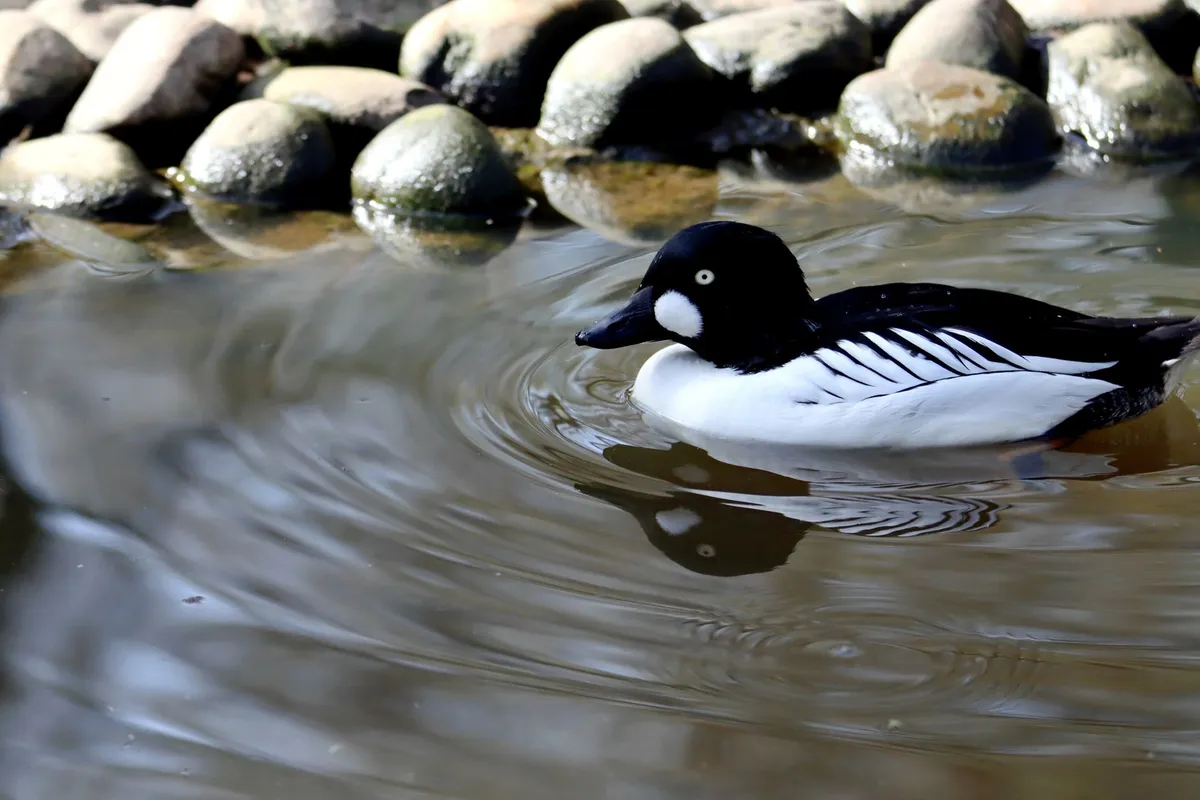
The Barrow's Goldeneye, or Bucephala islandica, is a medium-sized duck measuring about 15 to 16 inches in length and weighing between 1.8 to 2.6 pounds. Males exhibit striking plumage, with a black head featuring a distinctive white spot behind the eye, a golden body, and a white chest. Females, on the other hand, display brown and gray plumage, creating a marked sexual dimorphism. Their eyes are often bright yellow, adding a vivid touch to their appearance. This species is easily identifiable by its slender silhouette and rapid, agile flight.
Barrow's Goldeneye is primarily found in aquatic regions of Quebec, particularly in the southern territory where lakes, rivers, and wetlands are common. It frequents calm, shallow water bodies often surrounded by forests or dense vegetation. Regions like Montérégie, Estrie, and certain parts of Mauricie provide suitable habitats.
The Barrow's Goldeneye has an annual breeding cycle, typically nesting between April and June. Females build their nests near water, often in tree cavities or crevices. Their diet mainly consists of crustaceans, aquatic insects, and small aquatic plants. Their courtship behaviors are fascinating, with males showcasing their plumage and emitting distinctive calls to attract females.
It helps regulate populations of certain aquatic species and contributes to the health of wetland areas. To observe this species, it is recommended to visit peaceful lakes and rivers during the breeding season, using binoculars to admire these majestic birds in their natural habitat.
Other names
French
English
Presence in Quebec
- Origin
- Indigène
- Occurrence
- Régulier
- Population status
- Toute l'année
- Certainty
- Confirmé
Conservation
Québec.ca
Official periods
Source: Québec.ca — tables reproduced as published (retrieved 2026-08-30).
Regulations change. Always check Québec.ca before hunting or trapping.
SIT Québec register
Outfitters hunting this species
90 outfitters list this species among the game they hunt.
Where this data comes from
This species is listed in an official government dataset. The identification and status shown in the data sheet are reproduced from it.
Source: List of Quebec’s vertebrate wildlife (LFVQ) — Ministère de l’Environnement, de la Lutte contre les changements climatiques, de la Faune et des Parcs. File LFVQ_25_03_2026.csv, retrieved 2026-08-30 · CC BY 4.0.
Measurements, habitat, diet and reproduction are not shown: no official source is attached to them yet.