
No period published by Québec.ca
Québec.ca publishes no hunting or trapping period for this species. Check the official regulations.
Wikipedia
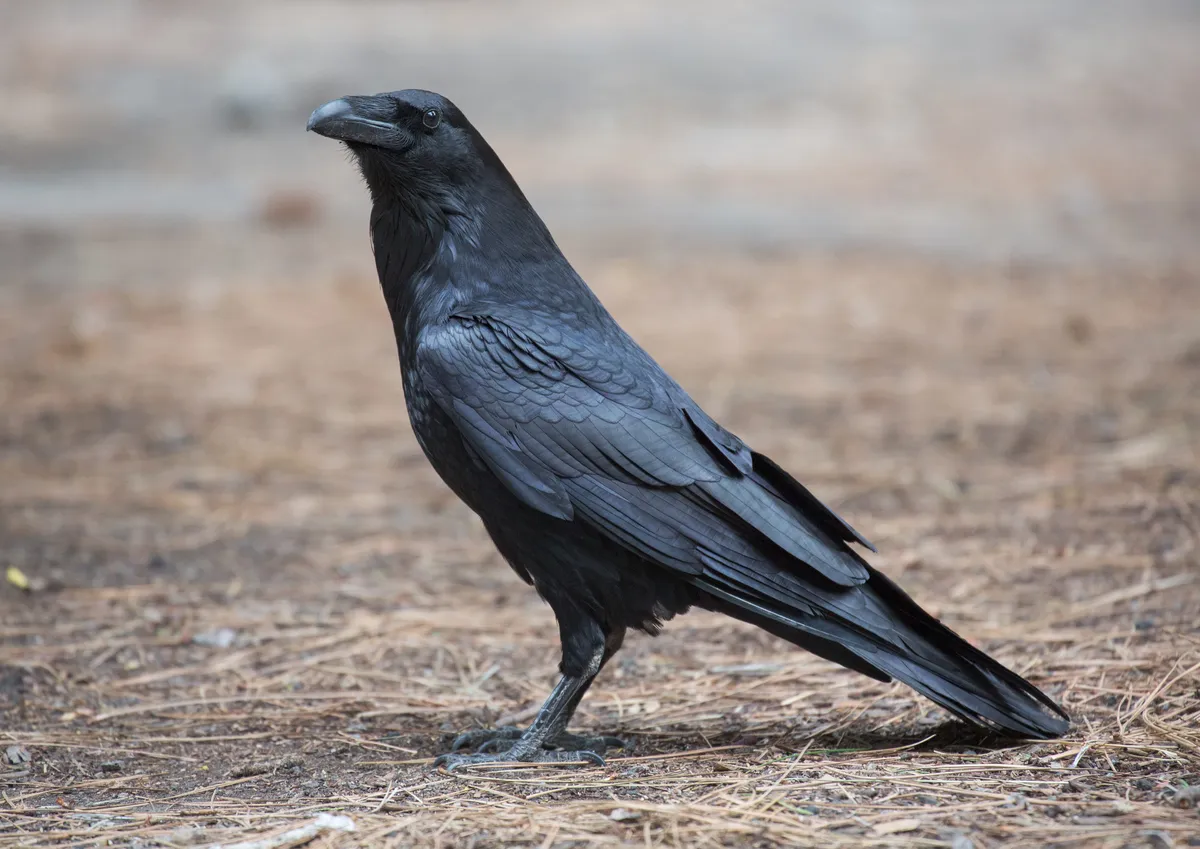
Grand corbeau
The common raven or northern raven (Corvus corax) is a large all-black passerine bird. It is the most widely distributed of all corvids, found across the Northern Hemisphere. There are 11 accepted subspecies with little variation in appearance, although recent research has demonstrated significant genetic differences among populations from various regions. It is one of the two largest corvids, alongside the thick-billed raven, and is the heaviest passerine bird; at maturity, the common raven averages 63 centimetres (25 inches) in length and 1.47 kilograms (3.2 pounds) in weight, up to 2 kg (4.4 lb) in the heaviest individuals. Although their typical lifespan is considerably shorter, common ravens can live more than 23 years in the wild. Young birds may travel in flocks but later mate for life, with each mated pair defending a territory. Common ravens have coexisted with humans for thousands of years and in some areas have been so numerous that people have regarded them as pests. Part of their success as a species is due to their omnivorous diet; they are extremely versatile and opportunistic in finding sources of nutrition, feeding on carrion, insects, cereal grains, berries, fruit, small animals, nesting birds, and food waste. Some notable feats of problem-solving provide evidence that the common raven is unusually intelligent. Over the centuries, the raven has been the subject of mythology, folklore, art, and literature. In many cultures, including the indigenous cultures of Scandinavia, ancient Ireland and Wales, Bhutan, the northwest coast of North America, and Siberia and northeast Asia, the common raven has been revered as a spiritual figure or godlike creature.
Description
A mature common raven ranges between 54 and 71 cm (21 and 28 in) and has a wingspan of 116 to 153 cm (46 to 60 in). Recorded weights range from 0.69 to 2.250 kg (1.52 to 4.96 lb), thus making the common raven one of the heaviest passerines. Birds from colder regions such as the Himalayas and Greenland are generally larger with slightly larger bills, while those from warmer regions are smaller with proportionally smaller bills. Representative of the size variation in the species, ravens from California weighed an average of 0.784 kg (1.73 lb), those from Alaska weighed an average of 1.135 kg (2.50 lb) and those from Nova Scotia weighed an average of 1.230 kg (2.71 lb). The bill is large and slightly curved, with a culmen length of 5.7 to 8.5 cm (2.2 to 3.3 in), one of the largest bills amongst passerines (only the thick-billed raven and white-necked raven have larger bills). It has a longish, strongly graduated tail, at 20 to 26.3 cm (7.9 to 10.4 in), and mostly iridescent black plumage, and a dark brown iris. The throat feathers are elongated and pointed and the bases of the neck feathers are pale brownish-grey. The legs and feet are stout and strong, with a tarsus length of 6 to 7.2 cm (2.4 to 2.8 in).
Text from Wikipedia — Common raven, revision 1369637417, CC BY-SA 4.0, retrieved 2026-09-04. Encyclopedic text reused under CC BY-SA 4.0. Sentences about hunting or regulation are removed: on this site, the rule comes from Québec.ca.
Other names
French
English
Presence in Quebec
- Origin
- Indigène
- Occurrence
- Régulier
- Population status
- Toute l'année
- Certainty
- Confirmé
Conservation
Québec.ca
Official periods
Source: Québec.ca — tables reproduced as published (retrieved 2026-08-30).
Regulations change. Always check Québec.ca before hunting or trapping.
Where this data comes from
This species is listed in an official government dataset. The identification and status shown in the data sheet are reproduced from it.
Source: List of Quebec’s vertebrate wildlife (LFVQ) — Ministère de l’Environnement, de la Lutte contre les changements climatiques, de la Faune et des Parcs. File LFVQ_25_03_2026.csv, retrieved 2026-08-30 · CC BY 4.0.
Measurements, habitat, diet and reproduction are not shown: no official source is attached to them yet.