
No period published by Québec.ca
Québec.ca publishes no hunting or trapping period for this species. Check the official regulations.
Wikipedia
Héron garde-boeufs
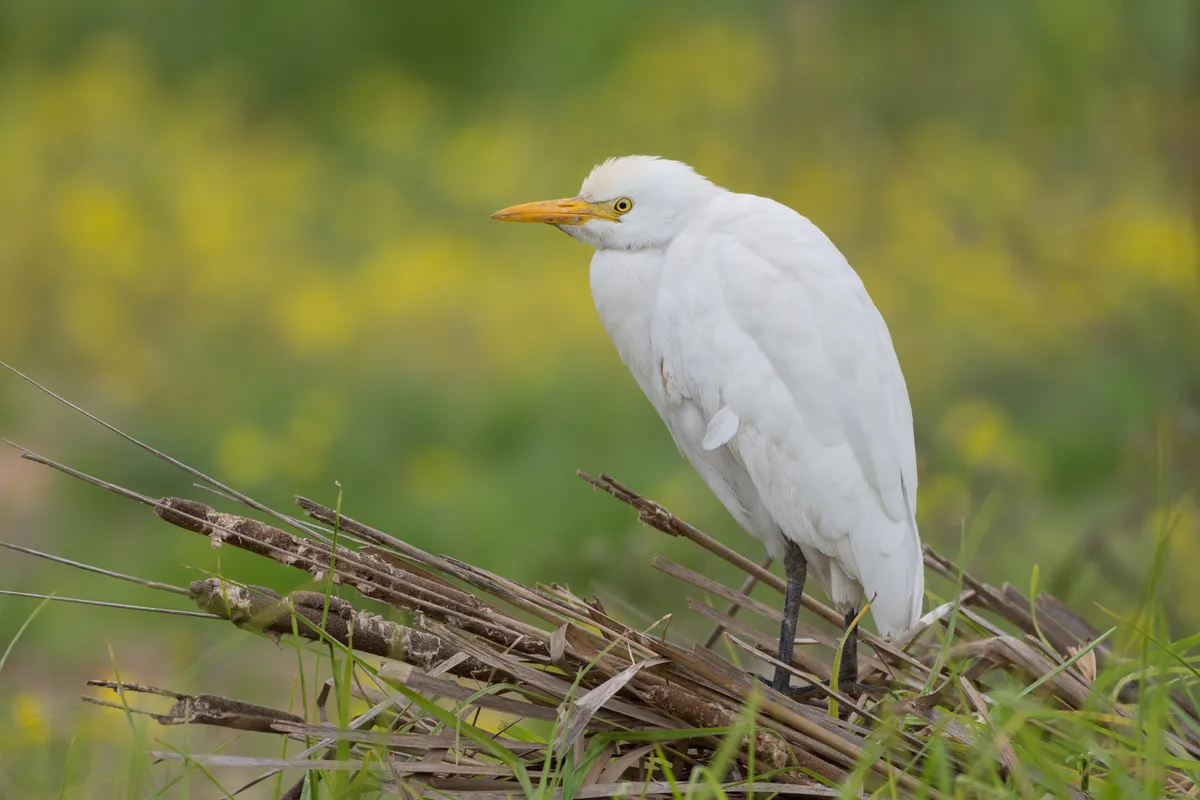
The western cattle egret (Ardea ibis) is a species of heron (family Ardeidae) found in the tropics, subtropics and warm temperate zones. Formerly, most taxonomic authorities lumped this species and the eastern cattle egret together (called the cattle egret), but the two cattle egrets are now treated as separate species. Despite the similarities in plumage to the egrets of the genus Egretta, it is more closely related to the herons of Ardea. Originally native to parts of Africa, southwest Asia and southern Europe, it has undergone a rapid expansion in its distribution and successfully colonised much of the New World in the last century. It is a white bird adorned with buff plumes in the breeding season. It nests in colonies, usually near bodies of water and often with other wading birds. The nest is a platform of sticks in trees or shrubs. Western cattle egrets exploit drier and open habitats more than other heron species. Their feeding habitats include seasonally inundated grasslands, pastures, farmlands, wetlands and rice paddies. They often accompany cattle or other large mammals, catching insect and small vertebrate prey disturbed by these animals. Some populations of the cattle egret are migratory and others show post-breeding dispersal. The adult cattle egret has few predators, but birds or mammals may raid its nests, and chicks may be lost to starvation, calcium deficiency or disturbance from other large birds. This species maintains a special relationship with cattle, which extends to other large grazing mammals; wider human farming is believed to be a major cause of their suddenly expanded range. The cattle egret removes ticks and flies from cattle and consumes them. This benefits both species, but it has been implicated in the spread of tick-borne animal diseases.
Description
The cattle egret is a stocky heron with an 88–96 cm (35–38 in) wingspan; it is 46–56 cm (18–22 in) long and weighs 270–512 g (9.5–18.1 oz). It has a relatively short thick neck, a sturdy bill, and a hunched posture. The non-breeding adult has mainly white plumage, a yellow bill and greyish-yellow legs. During the breeding season, adults of the nominate western subspecies develop orange-buff plumes on the back, breast and crown, and the bill, legs and irises become bright red for a brief period prior to pairing. The sexes are similar, but the male is marginally larger and has slightly longer breeding plumes than the female; juvenile birds lack coloured plumes and have a black bill. The positioning of the egret's eyes allows for binocular vision during feeding, and physiological studies suggest that the species may be capable of crepuscular or nocturnal activity. Adapted to foraging on land, they have lost the ability possessed by their wetland relatives to correct for light refraction by water accurately. This species gives a quiet, throaty rick-rack call at the breeding colony, but is otherwise largely silent.
Text from Wikipedia — Western cattle egret, revision 1371444866, CC BY-SA 4.0, retrieved 2026-09-04. Encyclopedic text reused under CC BY-SA 4.0. Sentences about hunting or regulation are removed: on this site, the rule comes from Québec.ca.
Other names
French
English
Former scientific names
Presence in Quebec
- Origin
- Indigène
- Occurrence
- Régulier
- Population status
- Migrateur
- Certainty
- Confirmé
Conservation
Québec.ca
Official periods
Source: Québec.ca — tables reproduced as published (retrieved 2026-08-30).
Regulations change. Always check Québec.ca before hunting or trapping.
Where this data comes from
This species is listed in an official government dataset. The identification and status shown in the data sheet are reproduced from it.
Source: List of Quebec’s vertebrate wildlife (LFVQ) — Ministère de l’Environnement, de la Lutte contre les changements climatiques, de la Faune et des Parcs. File LFVQ_25_03_2026.csv, retrieved 2026-08-30 · CC BY 4.0.
Measurements, habitat, diet and reproduction are not shown: no official source is attached to them yet.