
No period published by Québec.ca
Québec.ca publishes no hunting or trapping period for this species. Check the official regulations.
Wikipedia
Hirondelle rustique
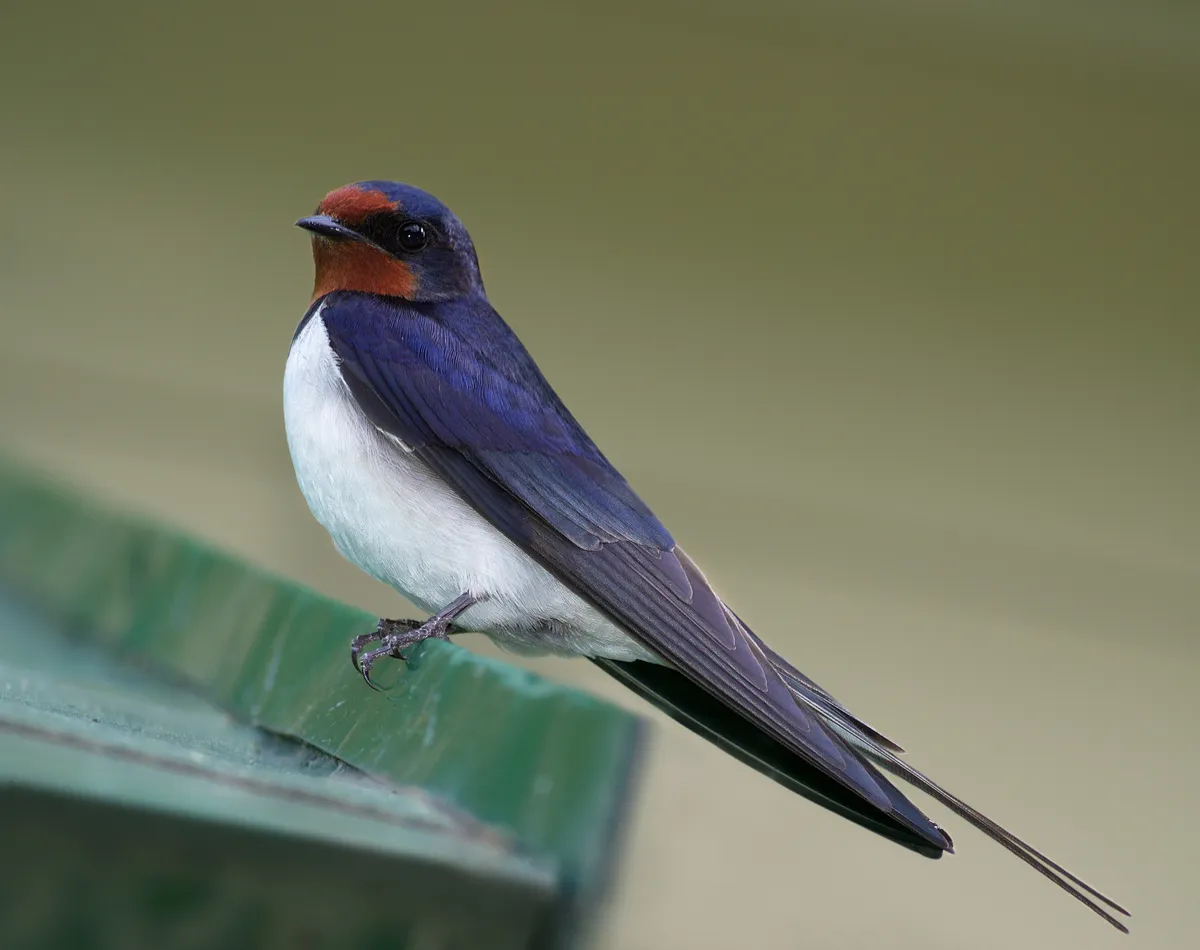
The barn swallow (Hirundo rustica) is the most widespread species of swallow in the world, occurring on all continents, with vagrants reported even in Antarctica. It is a distinctive passerine bird with blue upperparts and a long, deeply forked tail. In Anglophone Europe, it is just called the swallow; in northern Europe, it is the only member of family Hirundinidae called a "swallow" rather than a "martin". There are eight subspecies of barn swallow, which breed across the Northern Hemisphere. Two subspecies (H. r. savignii and H. r. transitiva) have fairly restricted ranges in the Nile valley and eastern Mediterranean, respectively. The other six are more widespread, with winter ranges covering much of the Southern Hemisphere. The barn swallow is a bird of open country that normally nests in man-made structures and consequently has spread with human expansion. It builds a cup nest from mud pellets in barns or similar structures and feeds on insects caught in flight. This species lives in close association with humans, and its insect-eating habits mean that it is tolerated by humans; this acceptance was reinforced in the past by superstitions regarding the bird and its nest. There are frequent cultural references to the barn swallow in literary and religious works due to both its living in close proximity to humans and its annual migration. The barn swallow is the national bird of Austria and Estonia.
Description
The adult male barn swallow of the nominate subspecies H. r. rustica is 17–19 cm (6+1⁄2–7+1⁄2 in) long including 2–7 cm (1–3 in) of elongated outer tail feathers. It has a wingspan of 32–34.5 cm (12+1⁄2–13+1⁄2 in) and weighs 16–22 g (9⁄16–3⁄4 oz). It has steel blue upperparts and a rufous forehead, chin and throat, which are separated from the off-white underparts by a broad dark blue breast band. The outer tail feathers are elongated, giving the distinctive deeply forked "swallow tail". There is a line of white spots across the outer end of the upper tail. The female is similar in appearance to the male, but the tail streamers are shorter, the blue of the upperparts and breast band is less glossy, and the underparts paler. The juvenile is browner and has a paler rufous face and whiter underparts. It also lacks the long tail streamers of the adult. Although both sexes sing, female song was only recently described. (See below for details about song.) Calls include witt or witt-witt and a loud splee-plink when excited or trying to chase intruders away from the nest. The alarm calls include a sharp siflitt for predators like cats and a flitt-flitt for birds of prey like the hobby. This species is fairly quiet on the wintering grounds. The distinctive combination of a red face and blue breast band renders the adult barn swallow easy to distinguish from the African Hirundo species and from the welcome swallow (Hirundo neoxena) with which its range overlaps in Australasia.
Text from Wikipedia — Barn swallow, revision 1360372727, CC BY-SA 4.0, retrieved 2026-09-04. Encyclopedic text reused under CC BY-SA 4.0. Sentences about hunting or regulation are removed: on this site, the rule comes from Québec.ca.
Other names
French
Presence in Quebec
- Origin
- Indigène
- Occurrence
- Régulier
- Population status
- Reproducteur
- Certainty
- Confirmé
Conservation
Québec.ca
Official periods
Source: Québec.ca — tables reproduced as published (retrieved 2026-08-30).
Regulations change. Always check Québec.ca before hunting or trapping.
Where this data comes from
This species is listed in an official government dataset. The identification and status shown in the data sheet are reproduced from it.
Source: List of Quebec’s vertebrate wildlife (LFVQ) — Ministère de l’Environnement, de la Lutte contre les changements climatiques, de la Faune et des Parcs. File LFVQ_25_03_2026.csv, retrieved 2026-08-30 · CC BY 4.0.
Measurements, habitat, diet and reproduction are not shown: no official source is attached to them yet.