
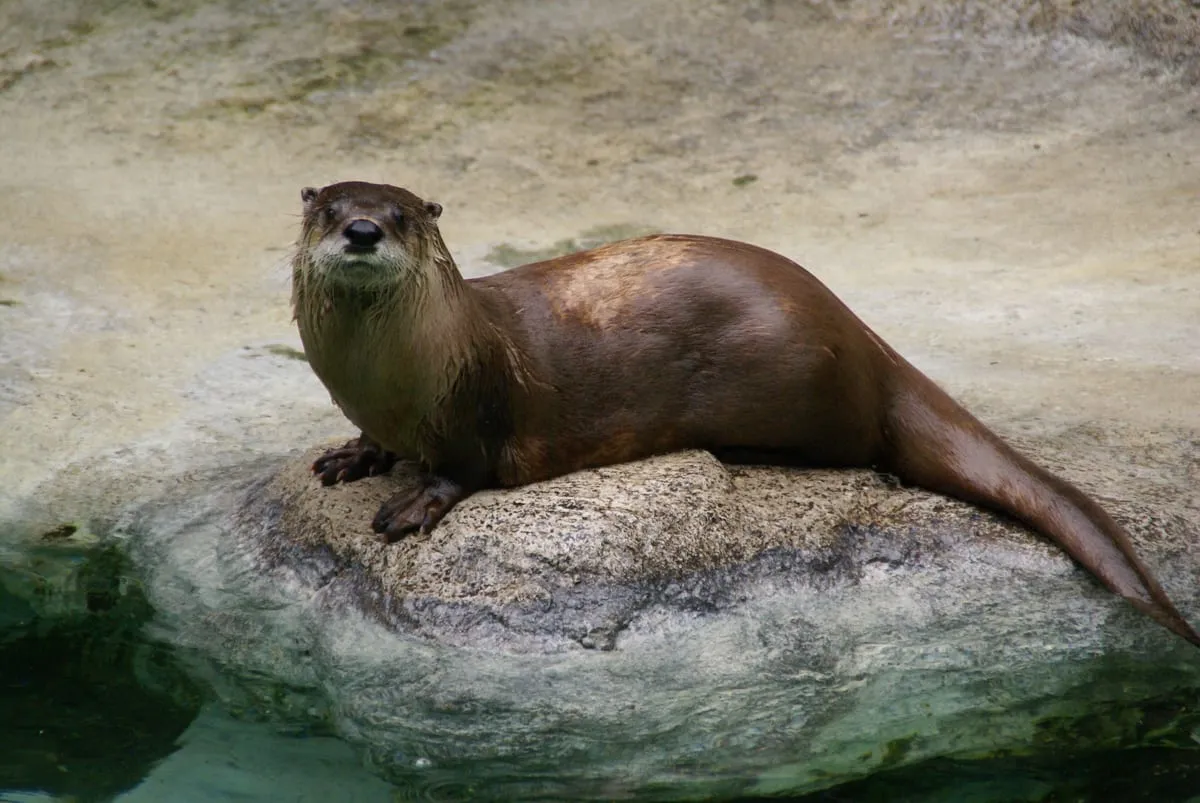
Loutre de rivière— species and hunting in Quebec
Lontra canadensis
MustelidaeTrapping periods published by Québec.ca
Official tables below — trapping units (UGAF) and dates.
Wikipedia
Loutre de rivière
The North American river otter (Lontra canadensis), also known as the northern river otter and river otter, is a semiaquatic mammal that is endemic to the North American continent throughout most of Canada and along the coasts of the United States and its inland waterways. An adult North American river otter can weigh between 5 and 14 kilograms (11–31 lb). The river otter is protected and insulated by a thick, water-repellent coat of fur. The North American river otter, a member of the subfamily Lutrinae in the weasel family (Mustelidae), is equally versatile in the water and on land. It establishes a burrow close to the water's edge in river, lake, swamp, coastal shoreline, tidal flat, or estuary ecosystems. The den typically has many tunnel openings, one of which generally allows the otter to enter and exit the body of water. Females give birth in these burrows, producing litters of one to six young. North American river otters, like most predators, prey upon the most readily accessible species. Fish is a favored food among the otters, but they also consume various amphibians (such as salamanders and frogs), freshwater clams, mussels, snails, small turtles, and crayfish. The most common fish consumed are perch, suckers, and catfish. Occasional reports also show the river otter eating other small animals, such as mice, squirrels, birds, and even dogs that they have attacked and drowned. The range of the North American river otter has been significantly reduced by habitat loss, beginning with the European colonization of the Americas. North American river otters are very susceptible to the effects of environmental pollution, which is a likely factor in the continued decline of their numbers. A number of reintroduction projects have been initiated to help halt the reduction in their overall population.
Description
The North American river otter has long and thin whiskers that are used to detect prey in dark waters. An average adult male weighs about 11.3 kilograms (25 lb) against the female's average of 8.3 kg (18 lb). Its body length ranges from 66 to 107 cm (26–42 in). About one-third of the animal's total length consists of a long, tapered tail. Tail lengths range from 30 to 50 cm (12–20 in). Large males can exceed a weight of 15 kg (33 lb). It differs from the Eurasian otter by its longer neck, narrower visage, the smaller space between the ears, and shorter tail. Males and female river otters show different nonsexual physical characteristics, with males typically being larger. North American river otters can live 21–25 years in captivity, or 8–13 years in the wild.
Text from Wikipedia — North American river otter, revision 1372792610, CC BY-SA 4.0, retrieved 2026-09-04. Encyclopedic text reused under CC BY-SA 4.0. Sentences about hunting or regulation are removed: on this site, the rule comes from Québec.ca.
Other names
French
Former scientific names
Presence in Quebec
- Origin
- Indigène
- Occurrence
- Régulier
- Population status
- Toute l'année
- Certainty
- Confirmé
Conservation
Québec.ca
Official periods
Source: Québec.ca — tables reproduced as published (retrieved 2026-08-30).
Trapping
Beaver and North American river otter
| UGAF | Periods |
|---|---|
| 1, 2, 3, 4, 5, 6, 7, 8, 9, 10, 11, 12, 13, 14, 15, 17, 18, 19, 20, 21, 22, 23, 26, 27, 28, 29, 30, 31, 32, 33, 34, 35, 36, 37, 38, 39, 40, 41, 42, 43, 44, 45, 46, 47, 48, 49, 50, 51, 52, 53, 54, 55, 56, 57, 58, 59, 60, 61, 62, 63, 64, 65, 66, 68 | From October 18 to March 22 |
| 16, 24, 25,70, 71, 72, 73, 74, 75, 76, 77, 78, 79, 80, 81, 82, 83, 84, 85, 86 | From October 25 to March 15 |
Regulations change. Always check Québec.ca before hunting or trapping.
Where this data comes from
This species is listed in an official government dataset. The identification and status shown in the data sheet are reproduced from it.
Source: List of Quebec’s vertebrate wildlife (LFVQ) — Ministère de l’Environnement, de la Lutte contre les changements climatiques, de la Faune et des Parcs. File LFVQ_25_03_2026.csv, retrieved 2026-08-30 · CC BY 4.0.
Measurements, habitat, diet and reproduction are not shown: no official source is attached to them yet.