
Trapping periods published by Québec.ca
Official tables below — trapping units (UGAF) and dates.
Wikipedia
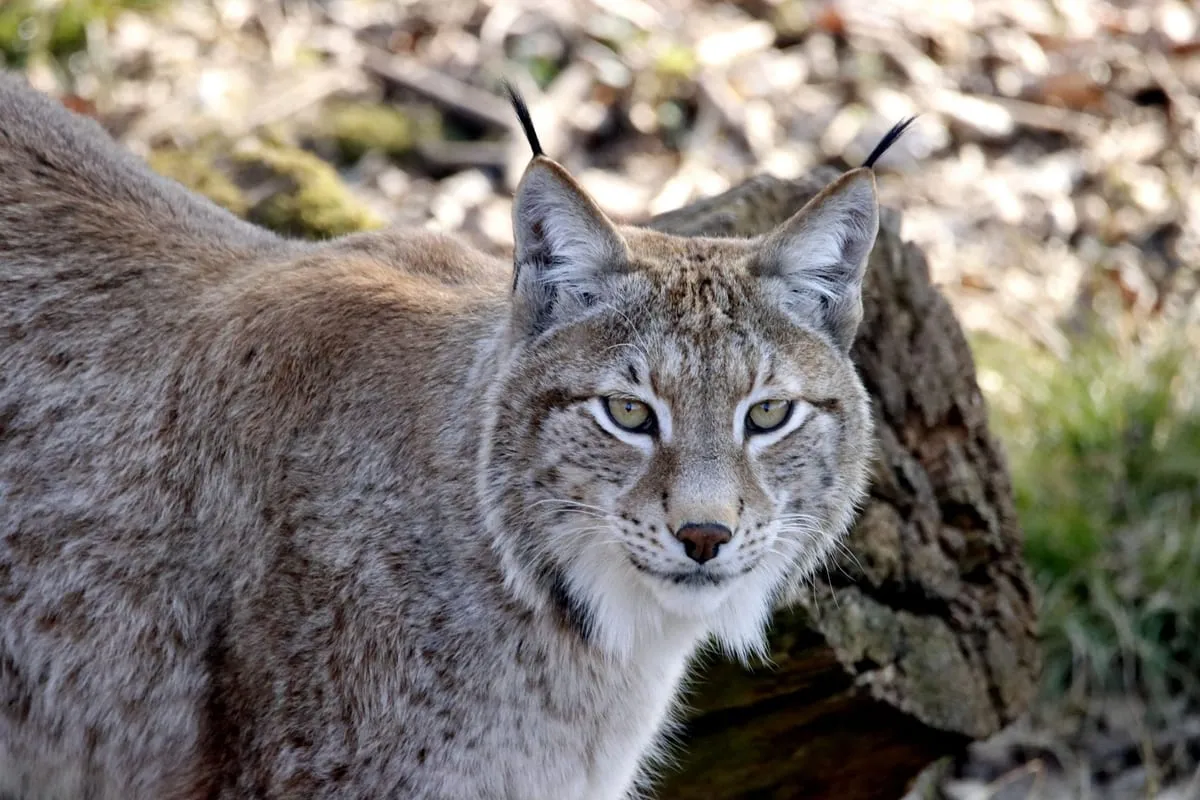
Lynx du Canada
The Canada lynx (Lynx canadensis) or Canadian lynx is one of the four living species in the genus Lynx. It is a medium-sized wild cat characterized by long, dense fur, triangular ears with black tufts at the tips, and broad, snowshoe-like paws. Its hindlimbs are longer than the forelimbs, so its back slopes downward to the front. The Canada lynx stands 48–56 cm (19–22 in) tall at the shoulder and weighs between 5 and 17 kg (11 and 37 lb). It is a good swimmer and an agile climber. The Canada lynx was first described by Robert Kerr in 1792. Three subspecies have been proposed, but their validity is doubted; it is mostly considered a monotypic species. It ranges across Alaska, Canada and northern areas of the contiguous United States, where it predominantly inhabits dense boreal forests. It is a specialist predator and depends heavily on the snowshoe hare (Lepus americanus) for food. This leads to a prey-predator cycle, as the Canada lynx population responds to the cyclic rises and falls in snowshoe hare populations over the years in Alaska and central Canada. The Canada lynx population increases with an increasing hare population; if the hare population decreases in a given area, it moves to areas with more hares and has fewer offspring. The Canada lynx waits for the hare on specific trails or in "ambush beds", then pounces on it and kills it by a bite on its head, throat or the nape of its neck. Individuals, particularly of the same sex, tend to avoid each other, forming "intrasexual" territories. The mating season is roughly a month long from March to early April. After a gestation of two to three months, females give birth to a litter of one to eight kittens, which are weaned at the age of 12 weeks. Given its abundance throughout the range and lack of severe threats, the Canada lynx has been listed as Least Concern on the IUCN Red List.
Text from Wikipedia — Canada lynx, revision 1366722124, CC BY-SA 4.0, retrieved 2026-09-04. Encyclopedic text reused under CC BY-SA 4.0. Sentences about hunting or regulation are removed: on this site, the rule comes from Québec.ca.
Other names
French
English
Presence in Quebec
- Origin
- Indigène
- Occurrence
- Régulier
- Population status
- Toute l'année
- Certainty
- Confirmé
Conservation
Québec.ca
Official periods
Source: Québec.ca — tables reproduced as published (retrieved 2026-08-30).
Trapping
Canada lynx and bobcat
| UGAF | Periods |
|---|---|
| 1, 2, 3, 4, 5, 6, 7, 11, 13, 17, 20, 21, 29, 30, 31, 32, 33, 34, 35, 38, 39, 41, 42, 43, 44, 45, 46, 47, 48, 49, 50, 51, 52, 53 | From October 18 to March 1 |
| 8, 9, 10, 12, 14, 15, 16, 18, 19, 22, 23, 24, 25, 26, 27, 28, 36, 37, 40, 70, 71, 72, 73, 74, 75, 76, 77, 78, 79, 80, 81, 82, 83, 84, 85, 86 | From October 25 to March 1 |
| 54, 55, 56, 57, 58, 59, 60, 61, 62, 63, 64, 65, 66, 68 | From October 18 to March 15 |
| 69 | From December 15 to December 31 |
Regulations change. Always check Québec.ca before hunting or trapping.
Where this data comes from
This species is listed in an official government dataset. The identification and status shown in the data sheet are reproduced from it.
Source: List of Quebec’s vertebrate wildlife (LFVQ) — Ministère de l’Environnement, de la Lutte contre les changements climatiques, de la Faune et des Parcs. File LFVQ_25_03_2026.csv, retrieved 2026-08-30 · CC BY 4.0.
Measurements, habitat, diet and reproduction are not shown: no official source is attached to them yet.