
No period published by Québec.ca
Québec.ca publishes no hunting or trapping period for this species. Check the official regulations.
Wikipedia
Musaraigne pygmée
The American pygmy shrew (Sorex hoyi), also called the eastern pygmy shrew, is a small shrew found throughout much of Alaska, Canada, and the northern contiguous United States, as well as south along the Appalachian Mountains and in a small region in the Colorado and Wyoming Rockies. The species was first discovered in 1831 by naturalist William Cane in Georgian Bay, Parry Sound. This animal is found in northern coniferous and deciduous forests of North America. It is believed to be the second-smallest mammal in the world, but has an extremely large appetite for its size. Due to its fast metabolism, it needs to eat constantly. It digs through moist soils and decaying leaf litter for food.
Description
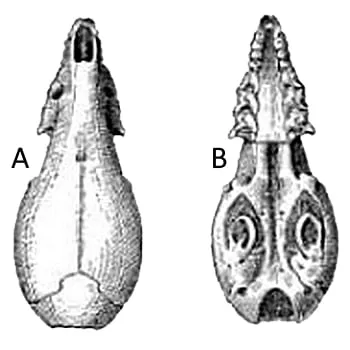
The American pygmy shrew is the smallest mammal native to North America and is one of the smallest mammals in the world, just slightly larger than the Etruscan shrew of Eurasia. Its body is about 5 cm (2 in) long including a 2-cm-long tail, and it weighs about 2.0 to 4.5 g (0.07 to 0.16 oz). Its pelage is generally a reddish or grayish brown during the summer, and a white-gray color during the winter. The underside is generally a lighter gray. This animal molts about twice a year, once during late summer, and again during the spring. It has a narrow head with a pointed nose, and whiskers. The eyes are small and well hidden.
Diet
Primarily insectivorous, this animal forages in moist soil and dead leaves to find its prey. Because of the pygmy shrew's small size, its diet primarily consists of insects and insect larvae, while the larger shrews eat insects and worms. Its diet is almost exclusively protein-based. To stay alive, the pygmy shrew has to eat three times its body weight daily, which means capturing prey every 15 to 30 minutes, day and night; a full hour without food means certain death. Because of this high metabolism, the pygmy shrew never sleeps more than a few minutes at a time, as it is in a constant search for food. Although due to its small body size it is always losing body heat, being small has its advantages during the winter when food is scarce. Predators of the American pygmy shrew include hawks, brook trout, owls, snakes, and domestic cats.
Text from Wikipedia — American pygmy shrew, revision 1354641963, CC BY-SA 4.0, retrieved 2026-09-04. Encyclopedic text reused under CC BY-SA 4.0. Sentences about hunting or regulation are removed: on this site, the rule comes from Québec.ca.
Other names
French
English
Former scientific names
Presence in Quebec
- Origin
- Indigène
- Occurrence
- Régulier
- Population status
- Toute l'année
- Certainty
- Confirmé
Conservation
Québec.ca
Official periods
Source: Québec.ca — tables reproduced as published (retrieved 2026-08-30).
Regulations change. Always check Québec.ca before hunting or trapping.
Where this data comes from
This species is listed in an official government dataset. The identification and status shown in the data sheet are reproduced from it.
Source: List of Quebec’s vertebrate wildlife (LFVQ) — Ministère de l’Environnement, de la Lutte contre les changements climatiques, de la Faune et des Parcs. File LFVQ_25_03_2026.csv, retrieved 2026-08-30 · CC BY 4.0.
Measurements, habitat, diet and reproduction are not shown: no official source is attached to them yet.