
No period published by Québec.ca
Québec.ca publishes no hunting or trapping period for this species. Check the official regulations.
Wikipedia
Paruline à capuchon
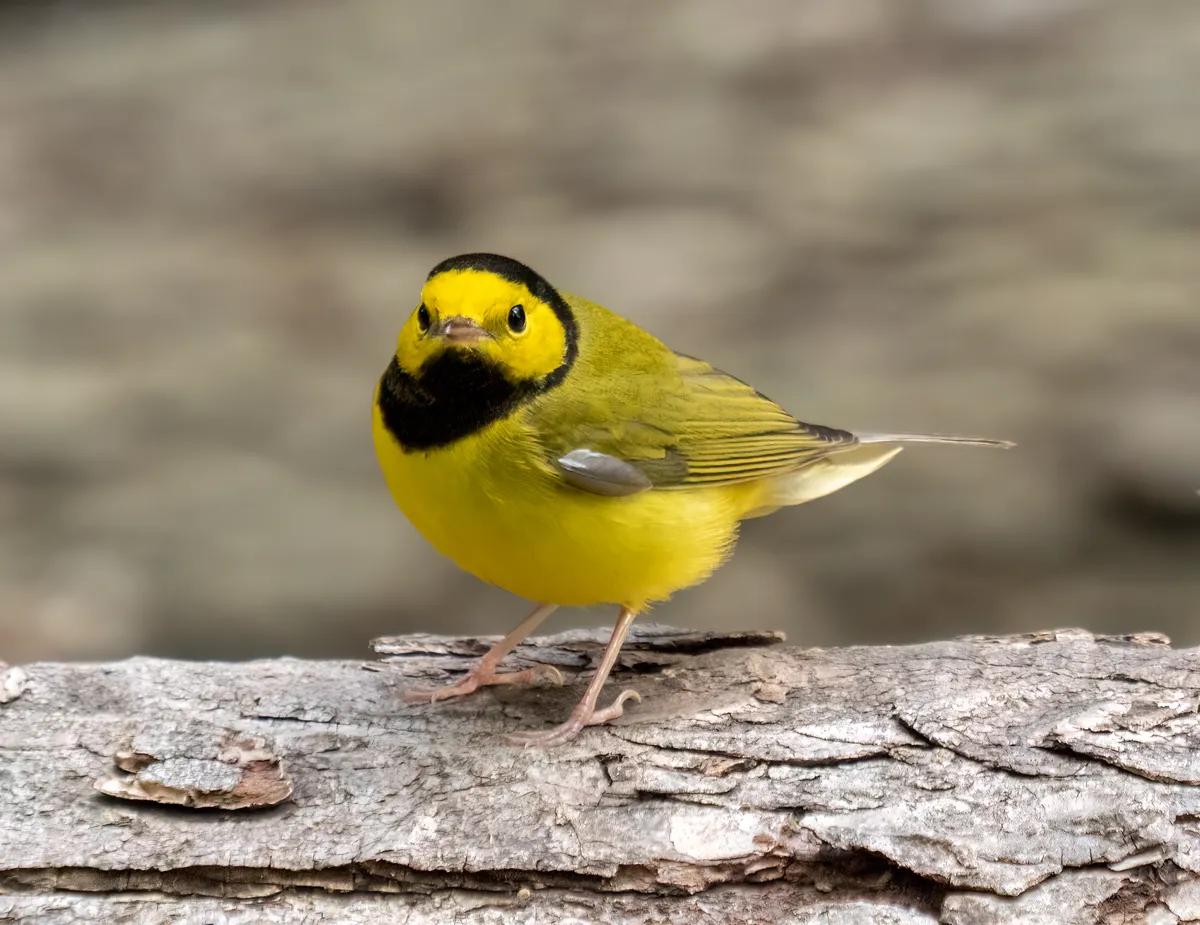
The hooded warbler (Setophaga citrina) is a New World warbler. It breeds in eastern North America across the eastern United States and into southernmost Canada (Ontario). It is migratory, wintering in Central America and the West Indies. Hooded warblers are very rare vagrants to western Europe. Recent genetic research has suggested that the type species of Wilsonia (hooded warbler W. citrina) and of Setophaga (American redstart S. ruticilla) are closely related and should be merged into the same genus. As the name Setophaga (published in 1827) takes priority over Wilsonia (published in 1838), hooded warbler would then be transferred as Setophaga citrina. This change has been accepted by the North American Classification Committee of the American Ornithologists' Union, and the IOC World Bird List. The South American Classification Committee continues to list the bird in the genus Wilsonia.
Description
The hooded warbler is a small bird and mid-sized warbler, measuring 13 cm (5.1 in) in length and weighing 9–12 g (0.32–0.42 oz). The hooded warbler has a wingspan of 6.9 in (17.5 cm). It has a plain olive/green-brown back and yellow underparts. Their outer rectrices have whitish vanes. Males have distinctive black hoods which surround their yellow faces; the female has an olive-green cap which does not extend to the forehead, ears, and throat. Males attain their hood at about 9–12 months of age; younger birds are essentially identical to (and easily confused with) females. The song is a series of musical notes which sound like: wheeta wheeta whee-tee-oh, for which a common mnemonic is "The red, the red T-shirt" or "Come to the woods or you won't see me". The call of these birds is a loud chip.
Text from Wikipedia — Hooded warbler, revision 1349273847, CC BY-SA 4.0, retrieved 2026-09-04. Encyclopedic text reused under CC BY-SA 4.0. Sentences about hunting or regulation are removed: on this site, the rule comes from Québec.ca.
Other names
French
Former scientific names
Presence in Quebec
- Origin
- Indigène
- Occurrence
- Accidentel/non régulier
- Population status
- Migrateur
- Certainty
- Confirmé
Conservation
Québec.ca
Official periods
Source: Québec.ca — tables reproduced as published (retrieved 2026-08-30).
Regulations change. Always check Québec.ca before hunting or trapping.
Where this data comes from
This species is listed in an official government dataset. The identification and status shown in the data sheet are reproduced from it.
Source: List of Quebec’s vertebrate wildlife (LFVQ) — Ministère de l’Environnement, de la Lutte contre les changements climatiques, de la Faune et des Parcs. File LFVQ_25_03_2026.csv, retrieved 2026-08-30 · CC BY 4.0.
Measurements, habitat, diet and reproduction are not shown: no official source is attached to them yet.