
No period published by Québec.ca
Québec.ca publishes no hunting or trapping period for this species. Check the official regulations.
Wikipedia
Paruline bleue
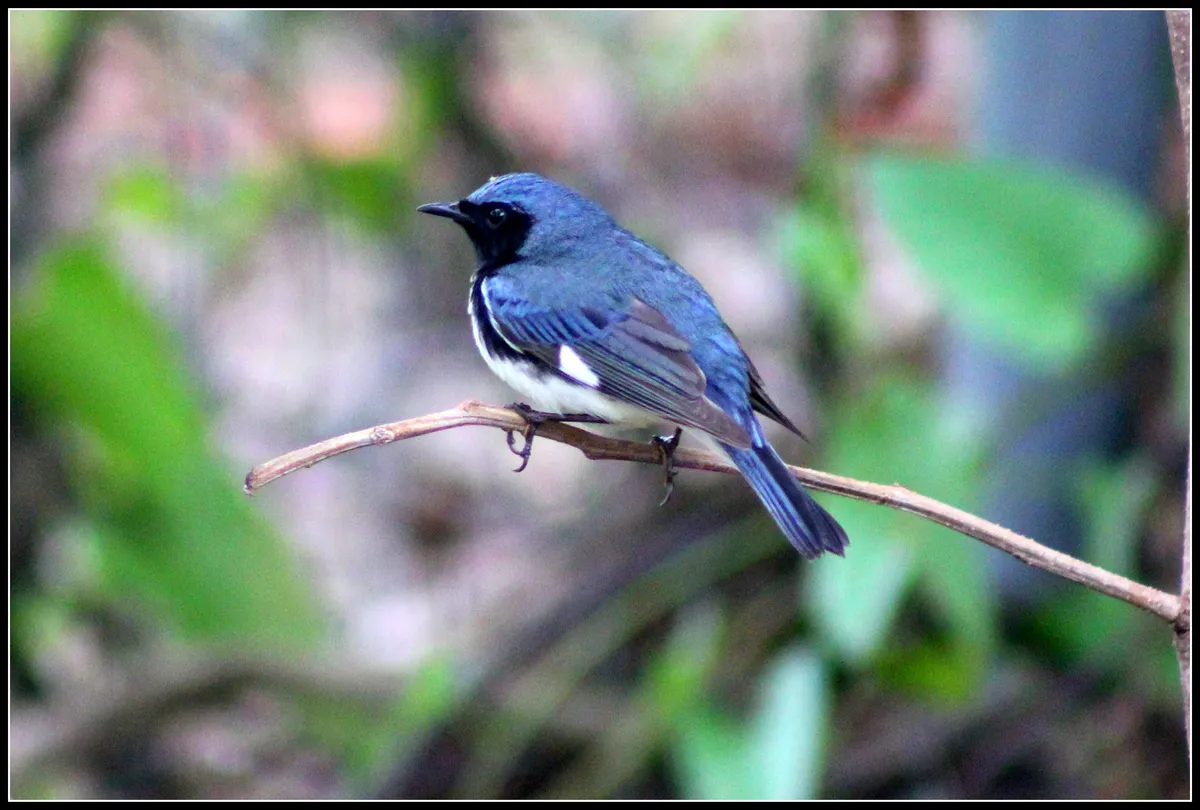
The black-throated blue warbler (Setophaga caerulescens) is a small passerine bird of the New World warbler family. Its breeding ranges are located in the interior of deciduous and mixed coniferous forests in eastern North America. Over the cooler months, it migrates to islands in the Caribbean and Central America. It is very rarely found in western Europe, where it is considered to be a non-indigenous species. The black-throated blue warbler is sexually dimorphic; the adult male has a black face and cheeks, deep blue upperparts and white underparts, while the adult female is olive-brown above and light yellow below. Predominantly insectivorous, the black-throated blue warbler supplements its diet with berries and seeds in winter. It builds its nests in thick shrubs and the closeness of its nesting sites to the ground make it a favored species for the study of warbler behavior in the wild. The black-throated blue warbler defends its territory against other birds of the same species for both nesting and winter habitats. As the black-throated blue warbler requires large, unbroken forest areas for nesting, its numbers are declining.
Description
The black-throated blue warbler measures 13 cm (5.1 in) in length and weighs 8.4–12.4 g (0.30–0.44 oz). Wingspan ranges from 7.5–7.9 in (19–20 cm). This is a strongly sexually dimorphic bird. The adult male has white underparts with a black throat, face and flanks. The upperparts are deep blue. The immature male is similar, but with greener upperparts. The female has olive-brown upperparts and light yellow underparts with darker wings and tail, gray crown and brown patches on the cheek. Both sexes have a thin pointed bill and small white wing patches which are not always visible. Like many other warbler species, it has colorful plumage during the spring and summer. However, outside the breeding season its plumage is drab and less distinctive. In the fall, the black-throated blue warbler can be distinguished by its small white wing patches. Juveniles have brown upperparts with a creamy supercilium and brownish spots on the throat, the breast and the belly. The bird's song can be described as a buzzed zee-zee-zeeee with an upward inflection. Its call is a flat ctuk.
Text from Wikipedia — Black-throated blue warbler, revision 1345484245, CC BY-SA 4.0, retrieved 2026-09-04. Encyclopedic text reused under CC BY-SA 4.0. Sentences about hunting or regulation are removed: on this site, the rule comes from Québec.ca.
Other names
French
English
Former scientific names
Presence in Quebec
- Origin
- Indigène
- Occurrence
- Régulier
- Population status
- Reproducteur
- Certainty
- Confirmé
Conservation
Québec.ca
Official periods
Source: Québec.ca — tables reproduced as published (retrieved 2026-08-30).
Regulations change. Always check Québec.ca before hunting or trapping.
Where this data comes from
This species is listed in an official government dataset. The identification and status shown in the data sheet are reproduced from it.
Source: List of Quebec’s vertebrate wildlife (LFVQ) — Ministère de l’Environnement, de la Lutte contre les changements climatiques, de la Faune et des Parcs. File LFVQ_25_03_2026.csv, retrieved 2026-08-30 · CC BY 4.0.
Measurements, habitat, diet and reproduction are not shown: no official source is attached to them yet.