
Trapping periods published by Québec.ca
Official tables below — trapping units (UGAF) and dates.
Wikipedia
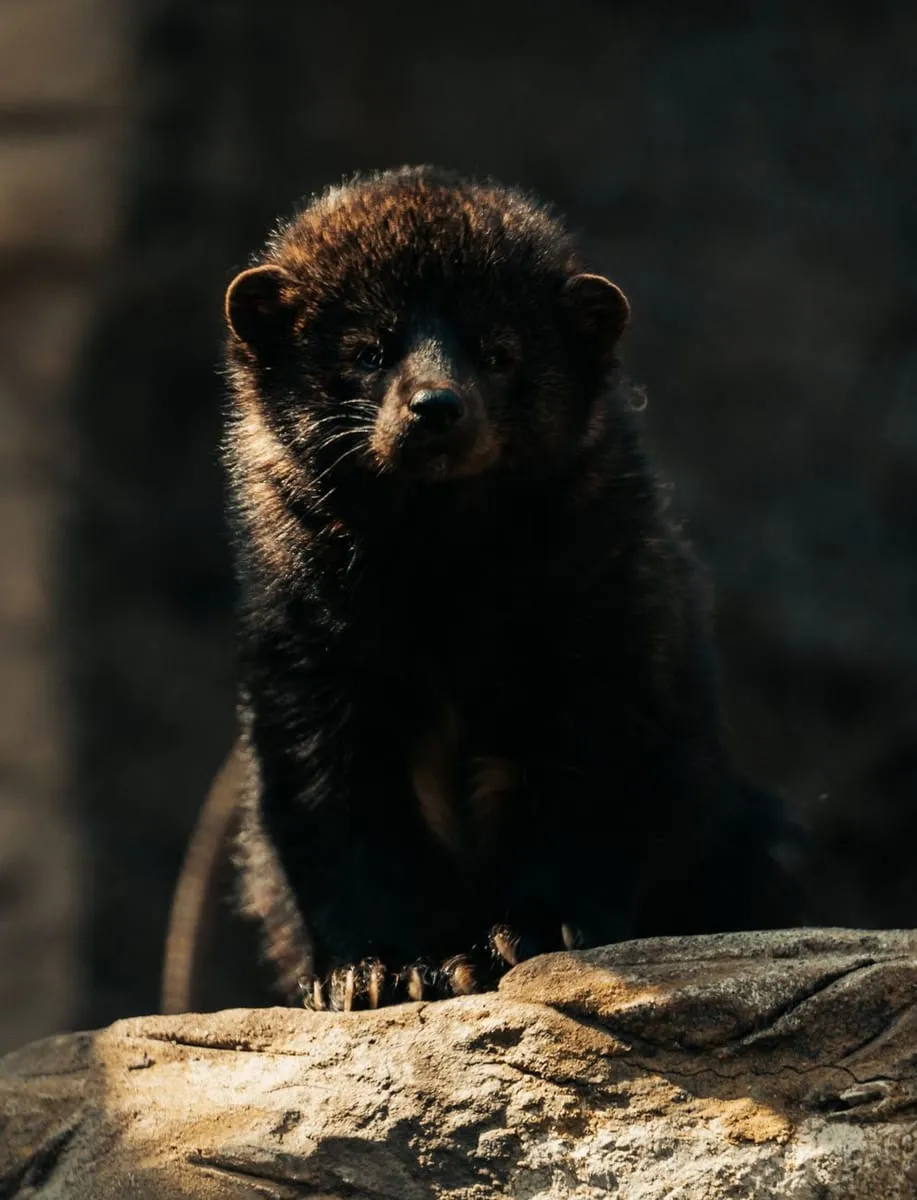
Pékan
The fisher (Pekania pennanti) is a carnivorous mammal native to North America, a forest-dwelling creature whose range covers much of the boreal forest in Canada to the northern United States. It is a member of the mustelid family and is the only living member of the genus Pekania. Although it is sometimes referred to as a fisher cat, it is not a feline. The fisher is similar to, but larger than, the American marten (Martes americana) and Pacific marten (Martes caurina). In some regions, the fisher is known as a pekan, derived from its name in the Abenaki language, or wejack, an Algonquian word (cf. Cree ocêk, Ojibwa ojiig) borrowed by fur traders. Other Indigenous names for the fisher are Chipewyan thacho and Carrier chunihcho, both meaning "big marten", and Wabanaki uskool. Fishers have few predators besides humans. Their pelts were in such demand that they became locally extinct in several parts of the United States in the early part of the 20th century. Conservation and protection measures have allowed the species to rebound, but their current range is still reduced from its historical limits. In the 1920s, when pelt prices were high, some fur farmers attempted to raise fishers. However, their unusual delayed reproduction made breeding difficult. When pelt prices fell in the late 1940s, most fisher farming ended. While fishers usually avoid human contact, encroachments into forest habitats have resulted in some conflicts. Male and female fishers look similar, but can be differentiated by size, with males being up to twice as large as the females. The fur of the fisher varies seasonally, being denser and glossier in the winter. During the summer, the color becomes more mottled, as the fur goes through a moulting cycle. Although an agile climber, it spends most of its time on the forest floor, where it prefers to forage around fallen trees. An omnivore, it feeds on a wide variety of small animals and occasionally on fruits and mushrooms. It prefers the snowshoe hare and is one of the few animals able to prey successfully on porcupines. Despite its common name, it rarely eats fish. The reproductive cycle lasts almost a year. Female fishers give birth to a litter of three or four kits in the spring. They nurse and care for them until late summer, when they are old enough to set out on their own. Females enter estrus shortly after giving birth and leave the den to find a mate. Implantation of the blastocyst is delayed until the following spring, when they give birth and the cycle is renewed.
Habitat and range
Although fishers are competent tree climbers, they spend most of their time on the forest floor and prefer continuous forest to other habitats. They have been found in extensive conifer forests typical of the boreal forest, but are also common in mixed-hardwood and conifer forests.
Text from Wikipedia — Fisher (animal), revision 1372094511, CC BY-SA 4.0, retrieved 2026-09-04. Encyclopedic text reused under CC BY-SA 4.0. Sentences about hunting or regulation are removed: on this site, the rule comes from Québec.ca.
Other names
French
Presence in Quebec
- Origin
- Indigène
- Occurrence
- Régulier
- Population status
- Toute l'année
- Certainty
- Confirmé
Conservation
Québec.ca
Official periods
Source: Québec.ca — tables reproduced as published (retrieved 2026-08-30).
Trapping
Long-tailed weasel, least weasel, Eastern grey squirrel, red squirrel, ermine, American marten and fisher
| UGAF | Periods |
|---|---|
| 1, 2, 3, 4, 5, 6, 7, 11, 13, 17, 31, 32, 39, 41, 42, 43, 44, 45, 46, 47, 48, 49, 50, 51, 52, 53 | From October 18 to March 1 |
| 8, 9, 10, 12, 14, 15, 18, 19, 20, 21, 22, 23, 26, 27, 28, 29, 30, 33, 34, 35, 36, 37, 38, 40 | From October 25 to February 15 |
| 16, 70, 71, 72, 73, 74, 75, 76, 77, 78, 79, 80, 81, 82 | From October 25 to February 1 |
| 24, 25, 83, 84, 85, 86 | From October 25 to March 1 |
| 54, 55, 56, 57, 58, 59, 60, 61, 62, 63, 64, 65, 66 | From October 18 to March 15 |
Regulations change. Always check Québec.ca before hunting or trapping.
Where this data comes from
This species is listed in an official government dataset. The identification and status shown in the data sheet are reproduced from it.
Source: List of Quebec’s vertebrate wildlife (LFVQ) — Ministère de l’Environnement, de la Lutte contre les changements climatiques, de la Faune et des Parcs. File LFVQ_25_03_2026.csv, retrieved 2026-08-30 · CC BY 4.0.
Measurements, habitat, diet and reproduction are not shown: no official source is attached to them yet.