
No period published by Québec.ca
Québec.ca publishes no hunting or trapping period for this species. Check the official regulations.
Wikipedia
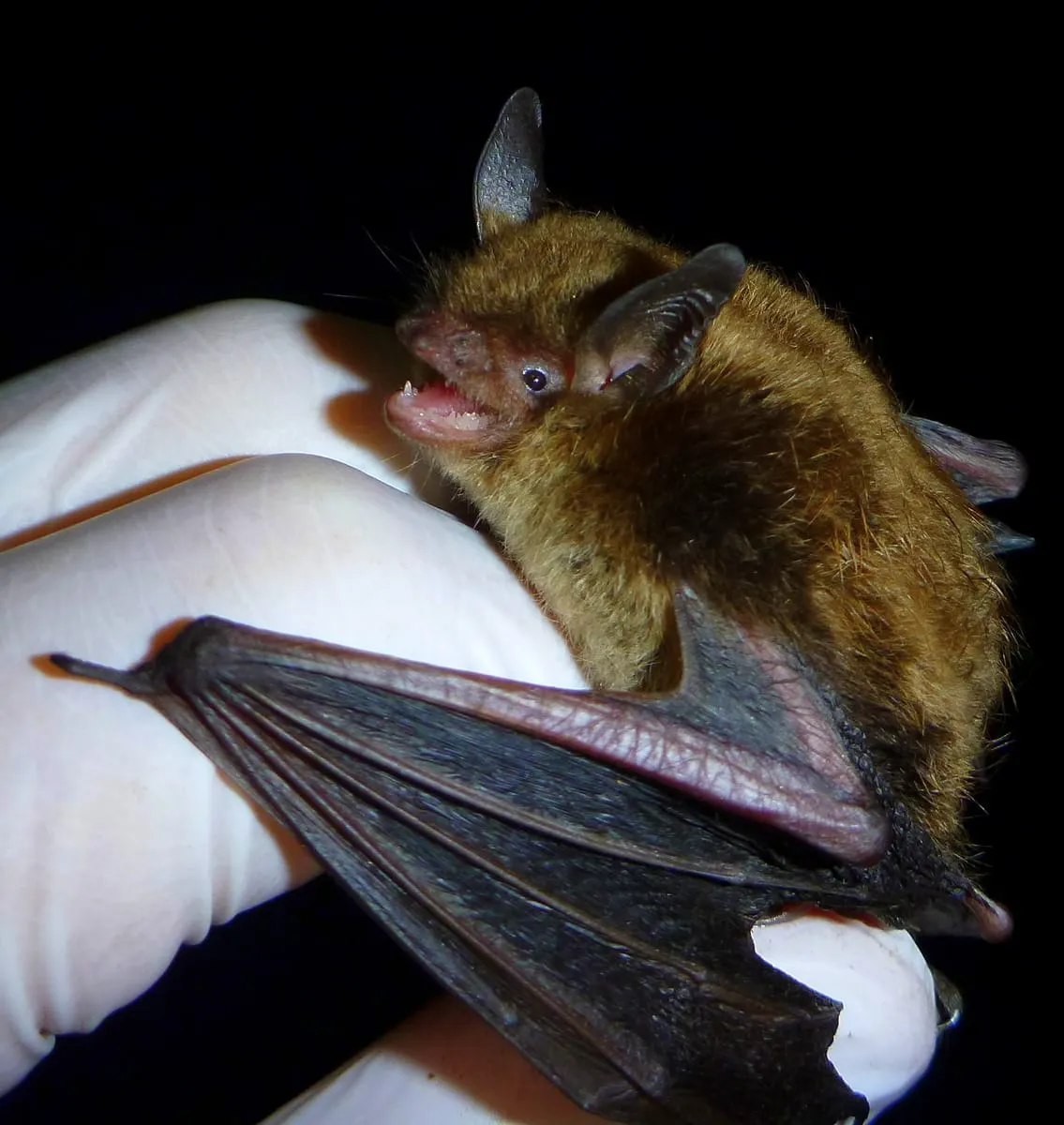
Petite chauve-souris brune
The little brown bat or little brown myotis (Myotis lucifugus) is an endangered species of mouse-eared microbat found in North America. It has a small body size and glossy brown fur. It is similar in appearance to several other mouse-eared bats, including the Indiana bat, northern long-eared bat, and Arizona myotis, to which it is closely related. Despite its name, the little brown bat is not closely related to the big brown bat, which belongs to a different genus. Its mating system is polygynandrous, or promiscuous, and females give birth to one offspring annually. The offspring, called pups, are quickly weaned and reach adult size in some dimensions by three weeks old. The little brown bat has a lifespan of 34-35 years. It is nocturnal, foraging for its insect prey at night and roosting in hollow trees or buildings during the day, among less common roost types. It navigates and locates prey with echolocation. It has few natural predators, but may be killed by raptors such as owls, as well as terrestrial predators such as raccoons. Other sources of mortality include diseases such as rabies and white-nose syndrome. White-nose syndrome has been a significant cause of mortality since 2006, killing over one million little brown bats by 2011. In the Northeastern United States, population loss has been extreme, with surveyed hibernacula (caves used for hibernation) averaging a population loss of 90%. Humans frequently encounter the little brown bat due to its habit of roosting in buildings. Colonies in buildings are often considered pests because of the production of waste or the concern of rabies transmission. Little brown bats rarely test positive for rabies, however. Some people attempt to attract little brown bats to their property, but not their houses, by installing bat houses.
Text from Wikipedia — Little brown bat, revision 1369073157, CC BY-SA 4.0, retrieved 2026-09-04. Encyclopedic text reused under CC BY-SA 4.0. Sentences about hunting or regulation are removed: on this site, the rule comes from Québec.ca.
Other names
French
Presence in Quebec
- Origin
- Indigène
- Occurrence
- Régulier
- Population status
- Toute l'année
- Certainty
- Confirmé
Conservation
Québec.ca
Official periods
Source: Québec.ca — tables reproduced as published (retrieved 2026-08-30).
Regulations change. Always check Québec.ca before hunting or trapping.
Where this data comes from
This species is listed in an official government dataset. The identification and status shown in the data sheet are reproduced from it.
Source: List of Quebec’s vertebrate wildlife (LFVQ) — Ministère de l’Environnement, de la Lutte contre les changements climatiques, de la Faune et des Parcs. File LFVQ_25_03_2026.csv, retrieved 2026-08-30 · CC BY 4.0.
Measurements, habitat, diet and reproduction are not shown: no official source is attached to them yet.