
No period published by Québec.ca
Québec.ca publishes no hunting or trapping period for this species. Check the official regulations.
Wikipedia
Rat surmulot
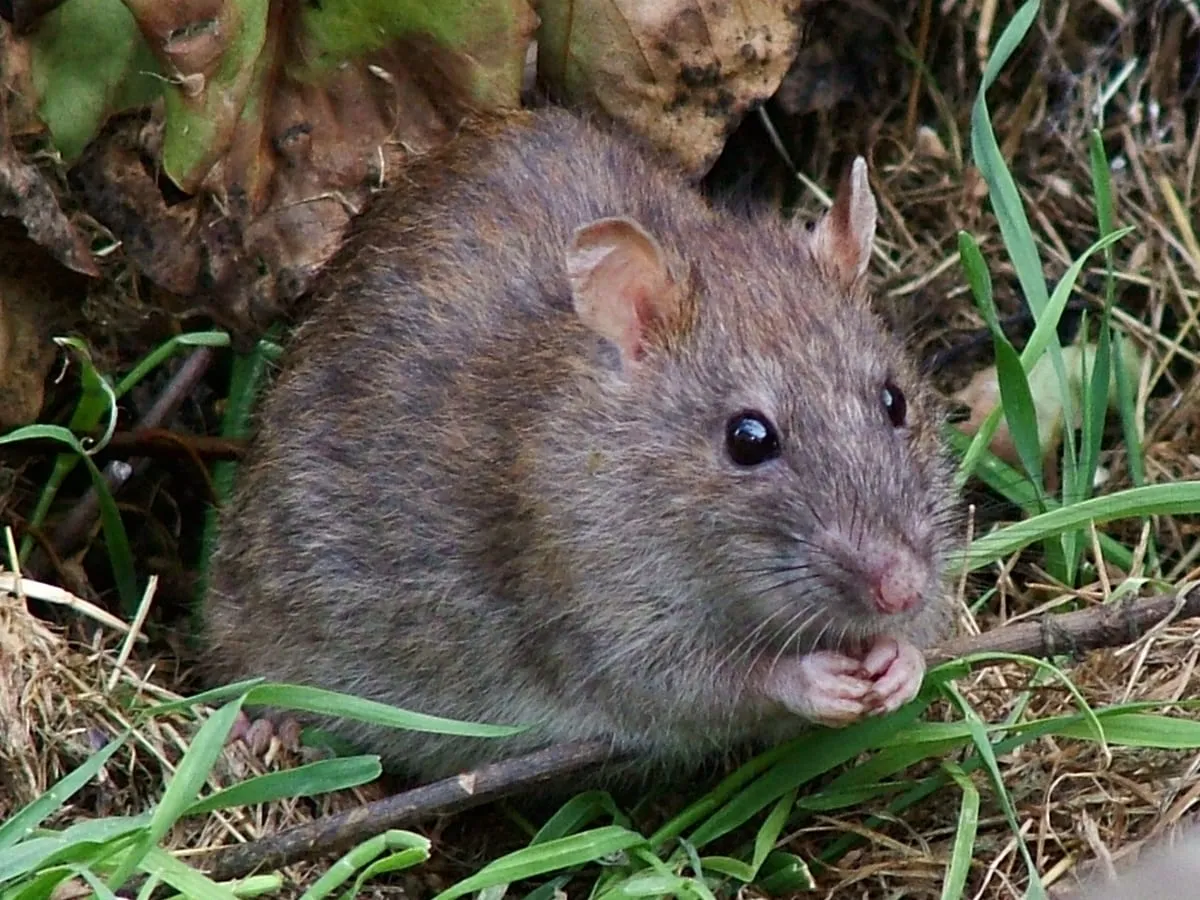
The brown rat (Rattus norvegicus), also known as the common rat, street rat, sewer rat, wharf rat, Hanover rat, Norway rat and Norwegian rat, is a widespread, common species of rat. One of the largest muroids, it is a brown or grey rodent with a body length of up to 28 cm (11 in) long, and a tail slightly shorter than that. It weighs between 140 and 500 g (4.9 and 17.6 oz). Thought to have originated in northern China and neighbouring areas, it has now spread to all continents except Antarctica, and is the dominant rat in Europe and much of North America, having become naturalised across the world. With rare exceptions, the brown rat lives wherever humans live, particularly in urban areas. It is omnivorous, reproduces rapidly, and can be a vector for several human diseases. Selective breeding of the brown rat has produced the fancy rat (rats kept as pets), as well as the laboratory rat (rats used as model organisms in biological research). Both fancy rats and laboratory rats are of the domesticated subspecies Rattus norvegicus domestica. Studies of wild rats in New York City have shown that populations living in different neighborhoods can evolve distinct genomic profiles over time, by slowly accruing different traits.
Description
The brown rat's fur is usually brown or dark grey, while the underparts are lighter grey or brown. The brown rat is a rather large murid and can weigh twice as much as a black rat (R. rattus) and many times more than a house mouse (Mus musculus). The head and body length ranges from 15 to 28 cm (5.9 to 11.0 in) while the tail ranges in length from 10.5 to 24 cm (4.1 to 9.4 in), therefore being shorter than the head and body. Adult weight ranges from 140 to 500 g (4.9 to 17.6 oz). Large individuals can reach 800 g (28 oz) but are not expected outside of domestic specimens. Stories of rats attaining sizes as big as cats are exaggerations, or misidentifications of larger rodents. It is common for breeding wild brown rats to weigh less than 300 g (11 oz). The heaviest live brown rat on record is 822 g (29 oz) and they can reach a maximum length of 482.5 mm (19 in). The brown rat has acute hearing, is sensitive to ultrasound, and possesses a very highly developed olfactory sense. Its average heart rate is 300 to 400 beats per minute, with a respiratory rate of around 100 per minute. The vision of a pigmented rat is poor, around 20/600, while a non-pigmented with no melanin in its eyes has both around 20/1200 vision and a terrible scattering of light within its vision. It is a dichromat which perceives colours rather like a human with red-green colorblindness, and its colour saturation may be quite faint. The blue perception, however, also has UV receptors, allowing it to see ultraviolet lights that humans and some other species cannot.
Text from Wikipedia — Brown rat, revision 1371272288, CC BY-SA 4.0, retrieved 2026-09-04. Encyclopedic text reused under CC BY-SA 4.0. Sentences about hunting or regulation are removed: on this site, the rule comes from Québec.ca.
Other names
French
Presence in Quebec
- Origin
- Exotique
- Occurrence
- Régulier
- Population status
- Toute l'année
- Certainty
- Confirmé
Conservation
Official remark
Introduite par les européens au début de la colonisation.
Québec.ca
Official periods
Source: Québec.ca — tables reproduced as published (retrieved 2026-08-30).
Regulations change. Always check Québec.ca before hunting or trapping.
Where this data comes from
This species is listed in an official government dataset. The identification and status shown in the data sheet are reproduced from it.
Source: List of Quebec’s vertebrate wildlife (LFVQ) — Ministère de l’Environnement, de la Lutte contre les changements climatiques, de la Faune et des Parcs. File LFVQ_25_03_2026.csv, retrieved 2026-08-30 · CC BY 4.0.
Measurements, habitat, diet and reproduction are not shown: no official source is attached to them yet.