
Hunting periods published by Québec.ca
Official tables below — zones, gear and dates.
Wikipedia
Raton laveur
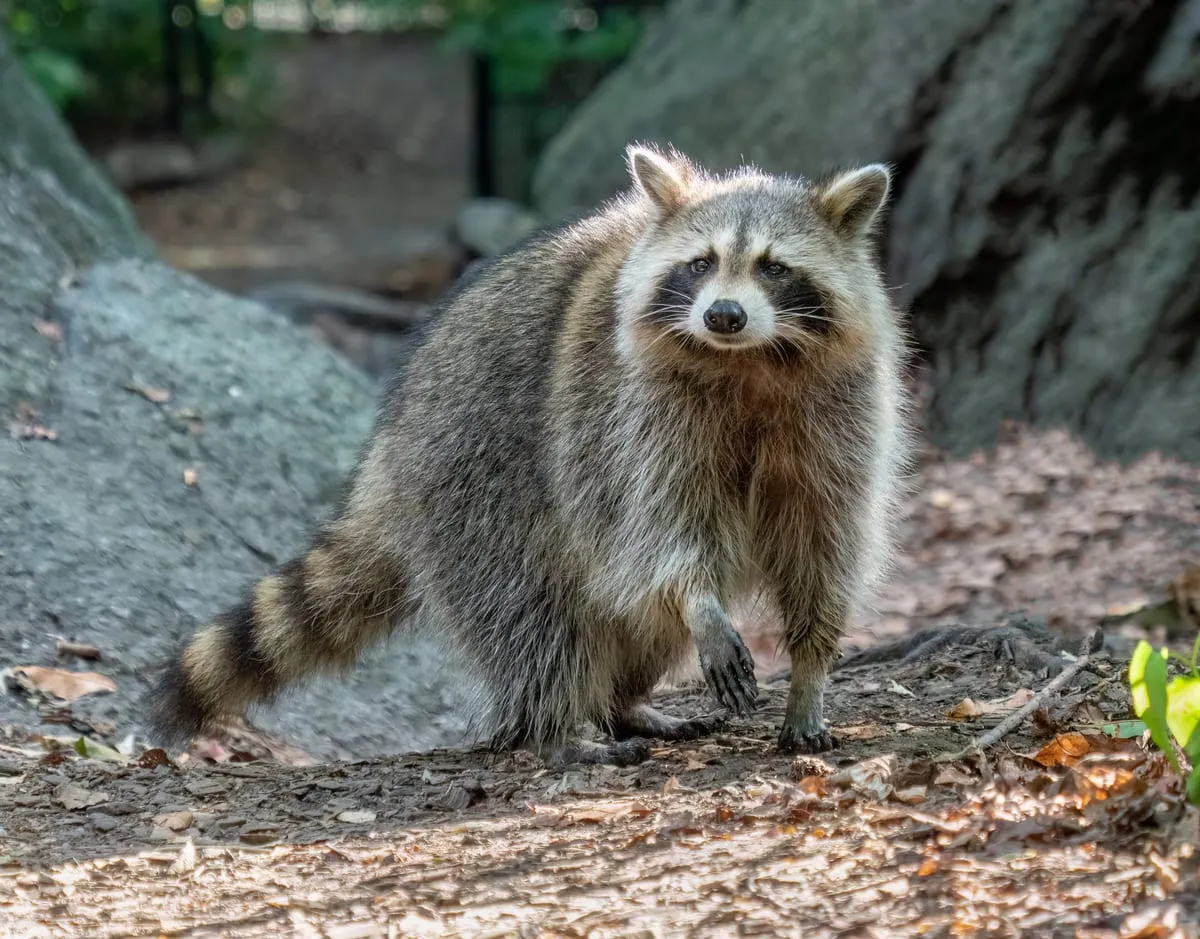
The raccoon ( or US: , Procyon lotor), sometimes called the North American, northern or common raccoon (also spelled racoon) to distinguish it from other species of raccoon, is a mammal native to North America. It is the largest of the procyonid family, having a body length of 40 to 70 cm (16 to 28 in), and a body weight of 5 to 26 kg (11 to 57 lb). Its grayish coat mostly consists of dense underfur, which insulates it against cold weather. The animal's most distinctive features include its extremely dexterous front paws, its facial mask, and its ringed tail, which are common themes in the mythologies of the Indigenous peoples of the Americas surrounding the species. The raccoon is noted for its intelligence, and studies show that it can remember the solution to tasks for at least three years. It is usually nocturnal and omnivorous, eating about 40% invertebrates, 33% plants, and 27% vertebrates. The original habitats of the raccoon are deciduous and mixed forests. Still, due to their adaptability, they have extended their range to mountainous areas, coastal marshes, and urban areas, where some homeowners consider them to be pests. As a result of escapes and deliberate introductions in the mid-20th century, raccoons are now also distributed across central Europe, the Caucasus, and Japan. In Europe, the raccoon has been included on the list of Invasive Alien Species of Union Concern since 2016. This implies that this species cannot be imported, bred, transported, commercialized, or intentionally released into the environment in the whole of the European Union. Though raccoons were previously thought to be generally solitary, there is now evidence that they engage in sex-specific social behavior. Related females often share a common area, while unrelated males live together in groups of up to four raccoons to maintain their positions against foreign males during the mating season and against other potential invaders. Home range sizes vary anywhere from 3 ha (7.4 acres) for females in cities, to 5,000 ha (50 km2; 19 sq mi) for males in prairies. After a gestation of about 65 days, two to five young known as "kits" are born in spring. The kits are subsequently raised by their mother until dispersal in late fall. Although captive raccoons have been known to live over 20 years, their life expectancy in the wild is only 1.8 to 3.1 years.
Text from Wikipedia — Raccoon, revision 1370920052, CC BY-SA 4.0, retrieved 2026-09-04. Encyclopedic text reused under CC BY-SA 4.0. Sentences about hunting or regulation are removed: on this site, the rule comes from Québec.ca.
Other names
French
Presence in Quebec
- Origin
- Indigène
- Occurrence
- Régulier
- Population status
- Toute l'année
- Certainty
- Confirmé
Conservation
Québec.ca
Official periods
Source: Québec.ca — tables reproduced as published (retrieved 2026-08-30).
Hunting
Raccoon
| Zone where hunting is permitted | Gear | 2026-2027 hunting season | 2027-2028 hunting season |
|---|---|---|---|
| 4, 5, 6, 7, 8 | Firearms, crossbow and bow | From October 25, 2026 to March 1, 2027 | From October 25, 2027 to March 1, 2028 |
| 4, 5, 6, 7, 8 | .22 rifle with rimfire cartridges, at night, with dogs | From October 25, 2026 to December 15, 2026 | From October 25, 2027 to December 15, 2027 |
Trapping
Striped skunk and raccoon
| UGAF | Periods |
|---|---|
| 1, 2, 3, 4, 5, 6, 7, 11, 13, 17, 31, 32, 39, 41, 42, 43, 44, 45, 46, 47, 48, 49, 50, 51, 52, 53 | From October 18 to March 1 |
| 8, 9, 10, 12, 14, 15, 18, 19, 20, 21, 22, 23, 26, 27, 28, 29, 30, 33, 34, 35, 36, 37, 38, 40 | From October 25 to February 15 |
| 16, 70, 71, 72, 73, 74, 75, 76, 77, 78, 79, 80, 81, 82 | From October 25 to February 1 |
| 24, 25, 83, 84, 85, 86 | From October 25 to March 1 |
| 54, 55, 56, 57, 58, 59, 60, 61, 62, 63, 64, 65, 66 | From October 18 to March 15 |
Zones where hunting is permitted
Zone numbers listed in the tables above. Each links to the official zone map (PDF).
Regulations change. Always check Québec.ca before hunting or trapping.
On this site
Related articles
Where this data comes from
This species is listed in an official government dataset. The identification and status shown in the data sheet are reproduced from it.
Source: List of Quebec’s vertebrate wildlife (LFVQ) — Ministère de l’Environnement, de la Lutte contre les changements climatiques, de la Faune et des Parcs. File LFVQ_25_03_2026.csv, retrieved 2026-08-30 · CC BY 4.0.
Measurements, habitat, diet and reproduction are not shown: no official source is attached to them yet.