
No period published by Québec.ca
Québec.ca publishes no hunting or trapping period for this species. Check the official regulations.
Wikipedia
Sarcelle à ailes bleues
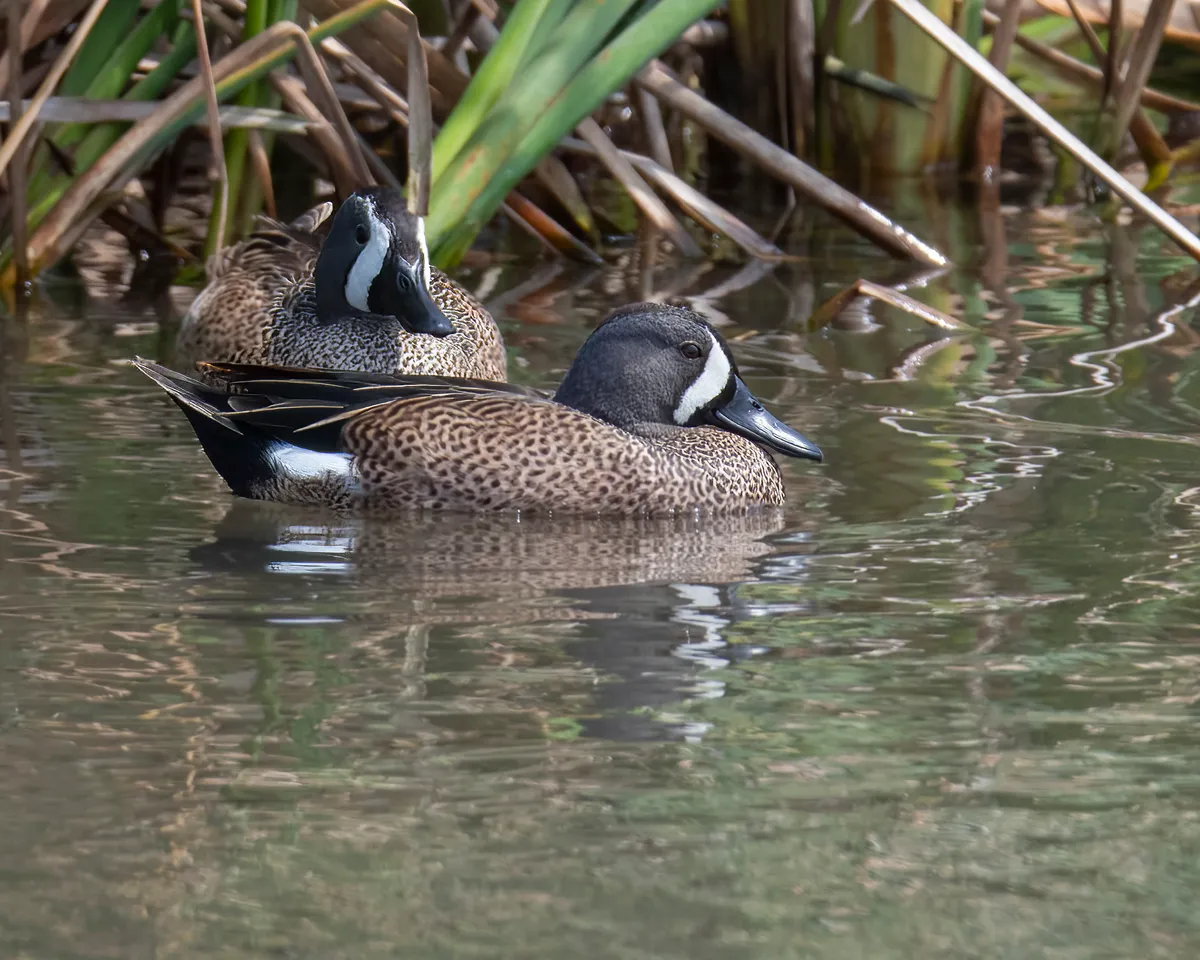
The blue-winged teal (Spatula discors) is a species of bird in the duck, goose, and swan family Anatidae. One of the smaller members of the dabbling duck group, it occurs in North America, where it breeds from southern Alaska to Nova Scotia, and south to northern Texas. It winters along the Pacific and Atlantic coasts and south into the Caribbean islands and Central America.
Description
The blue-winged teal is 40 cm (16 in) long, with a wingspan of 58 cm (23 in), and a weight of 370 g (13 oz). The adult male has a greyish blue head with a white facial crescent, a light brown body with a white patch near the rear and a black tail. The adult female is mottled brown, and has a whitish area at base of bill. Both sexes have sky-blue wing coverts, a green speculum, and yellow legs. They have two molts per year and a third molt in their first year. The call of the male is a short whistle; the female's call is a soft quack.
Habitat and range
The range is all of North America except western and northern Alaska, northern Yukon Territory, northern Northwest Territories and the northeastern area of Canada. Blue-winged teal are rare in the desert southwest, and the west coast. The breeding habitat of the blue-winged teal is marshes and ponds. The breeding range extends from east-central Alaska and southern Mackenzie District east to southern Quebec and southwestern Newfoundland. In the contiguous United States it breeds from northeast California east to central Louisiana, central Tennessee, and the Atlantic Coast. The western blue-winged teal inhabits that part of the breeding range west of the Appalachian Mountains. Some populations of blue-winged teals nest along the Atlantic Coast from New Brunswick to Pea Island, North Carolina. They migrate in flocks to winter in to the south of its breeding range. During migration, some birds may fly long distances over open ocean. They are occasional vagrants to Europe, where their yellow legs are a distinction from other small ducks like the common teal and garganey, and in recent years have been annual vagrants in Britain and Ireland. The blue-winged teal winters from southern California to western and southern Texas, the Gulf Coast to the Atlantic Coast, the Caribbean, and south to Central and South America. It is often seen wintering as far south as Brazil and central Chile.
Text from Wikipedia — Blue-winged teal, revision 1356796118, CC BY-SA 4.0, retrieved 2026-09-04. Encyclopedic text reused under CC BY-SA 4.0. Sentences about hunting or regulation are removed: on this site, the rule comes from Québec.ca.
Other names
French
English
Former scientific names
Presence in Quebec
- Origin
- Indigène
- Occurrence
- Régulier
- Population status
- Reproducteur
- Certainty
- Confirmé
Conservation
Québec.ca
Official periods
Source: Québec.ca — tables reproduced as published (retrieved 2026-08-30).
Regulations change. Always check Québec.ca before hunting or trapping.
Where this data comes from
This species is listed in an official government dataset. The identification and status shown in the data sheet are reproduced from it.
Source: List of Quebec’s vertebrate wildlife (LFVQ) — Ministère de l’Environnement, de la Lutte contre les changements climatiques, de la Faune et des Parcs. File LFVQ_25_03_2026.csv, retrieved 2026-08-30 · CC BY 4.0.
Measurements, habitat, diet and reproduction are not shown: no official source is attached to them yet.