
No period published by Québec.ca
Québec.ca publishes no hunting or trapping period for this species. Check the official regulations.
Wikipedia
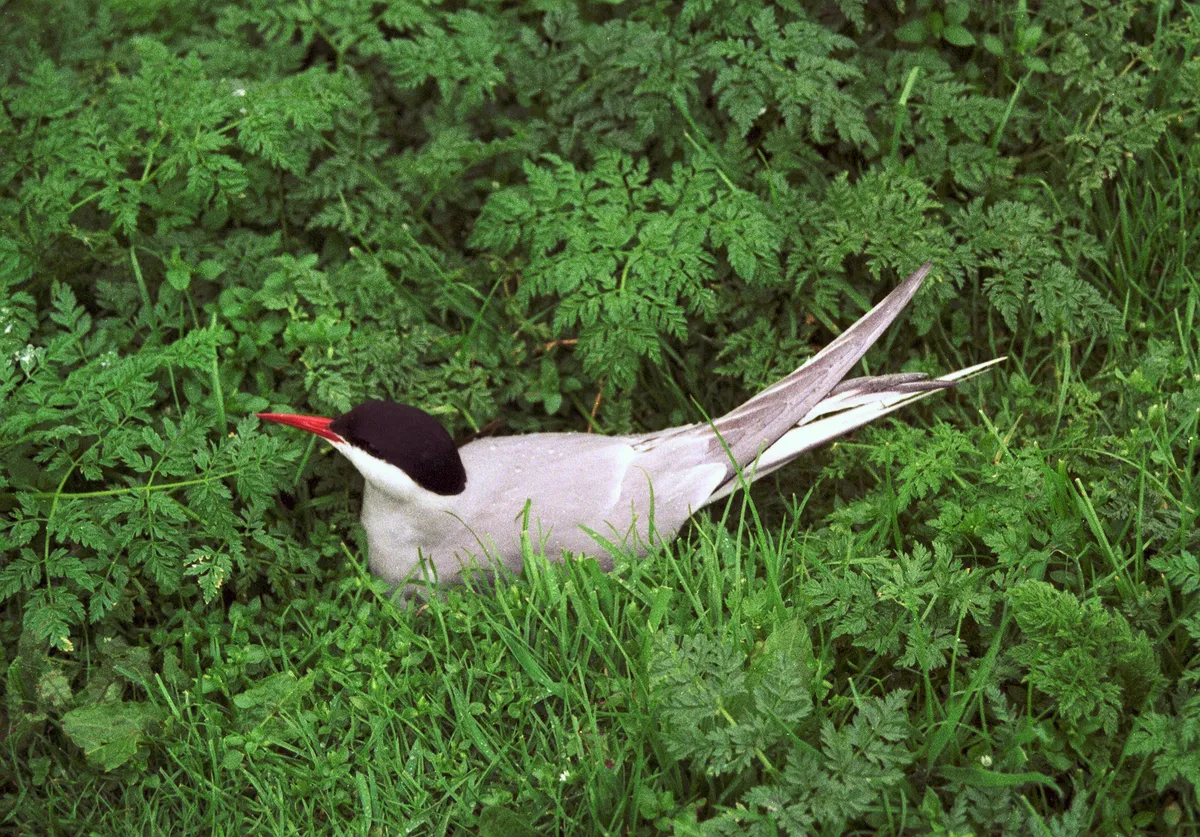
Sterne arctique
The Arctic tern (Sterna paradisaea) is a tern in the family Laridae. This bird has a circumpolar breeding distribution covering the Arctic and subarctic regions of Europe (as far south as Brittany), Asia, and North America (as far south as Massachusetts). The species is strongly migratory, seeing two summers each year as it migrates along a convoluted route from its northern breeding grounds to the Antarctic coast for the southern summer and back again about six months later. Recent studies have shown average annual round-trip lengths of about 70,900 km (38,300 nmi) for birds nesting in Iceland and Greenland, and about 48,700 km (26,300 nmi) for birds nesting in the Netherlands, while an individual from the Farne Islands in Northumberland with a light level geolocator tag covered a staggering 96,000 km (52,000 nmi) in ten months from the end of one breeding season to the start of the next. These are by far the longest migrations known in the animal kingdom. Arctic terns are medium-sized birds. They have a length of 33–36 cm (13–14 in) and a wingspan of 76–85 cm (30–33 in), and weigh around 100 g. In the breeding season they are mainly grey and white, with a blood-red beak and feet, a black crown and nape, and white cheeks. The mantle is grey, and the scapulars grey, tipped white. The upper wing is grey with a white leading edge and a narrow blackish trailing edge on the primary feathers; the collar is completely white, as is the rump. The deeply forked tail is whitish, with grey outer webs. In winter, the forehead becomes partly white, and the bill and legs are black. Juveniles also have a partly white forehead, and narrow pale orangey-brown fringes on the grey mantle feathers (unlike common tern, where the mantle feathers are more completely gingery-brown). Arctic terns are long-lived birds, with many reaching fifteen to thirty years of age, with a record of 31 years. They eat mainly fish and small marine invertebrates. The species is abundant, with an estimated two million individuals. While the trend in the number of individuals in the species as a whole is not known, exploitation in the past has reduced this bird's numbers in the southern reaches of its ranges.
Reproduction
Breeding begins around the third or fourth year. Arctic terns mate for life and, in most cases, return to the same colony each year. Courtship is elaborate, especially in birds nesting for the first time. Courtship begins with a so-called "high flight", where a female will chase the male to a high altitude and then slowly descend. This display is followed by "fish flights", where the male will offer fish to the female. Courtship on the ground involves strutting with a raised tail and lowered wings. After this, both birds will usually fly and circle each other. Both sexes agree on a site for a nest, and both will defend the site. During this time, the male continues to feed the female. Mating occurs shortly after this.
Text from Wikipedia — Arctic tern, revision 1372963098, CC BY-SA 4.0, retrieved 2026-09-04. Encyclopedic text reused under CC BY-SA 4.0. Sentences about hunting or regulation are removed: on this site, the rule comes from Québec.ca.
Other names
French
English
Presence in Quebec
- Origin
- Indigène
- Occurrence
- Régulier
- Population status
- Reproducteur
- Certainty
- Confirmé
Conservation
Québec.ca
Official periods
Source: Québec.ca — tables reproduced as published (retrieved 2026-08-30).
Regulations change. Always check Québec.ca before hunting or trapping.
Where this data comes from
This species is listed in an official government dataset. The identification and status shown in the data sheet are reproduced from it.
Source: List of Quebec’s vertebrate wildlife (LFVQ) — Ministère de l’Environnement, de la Lutte contre les changements climatiques, de la Faune et des Parcs. File LFVQ_25_03_2026.csv, retrieved 2026-08-30 · CC BY 4.0.
Measurements, habitat, diet and reproduction are not shown: no official source is attached to them yet.