
No period published by Québec.ca
Québec.ca publishes no hunting or trapping period for this species. Check the official regulations.
Wikipedia
Sterne de Dougall
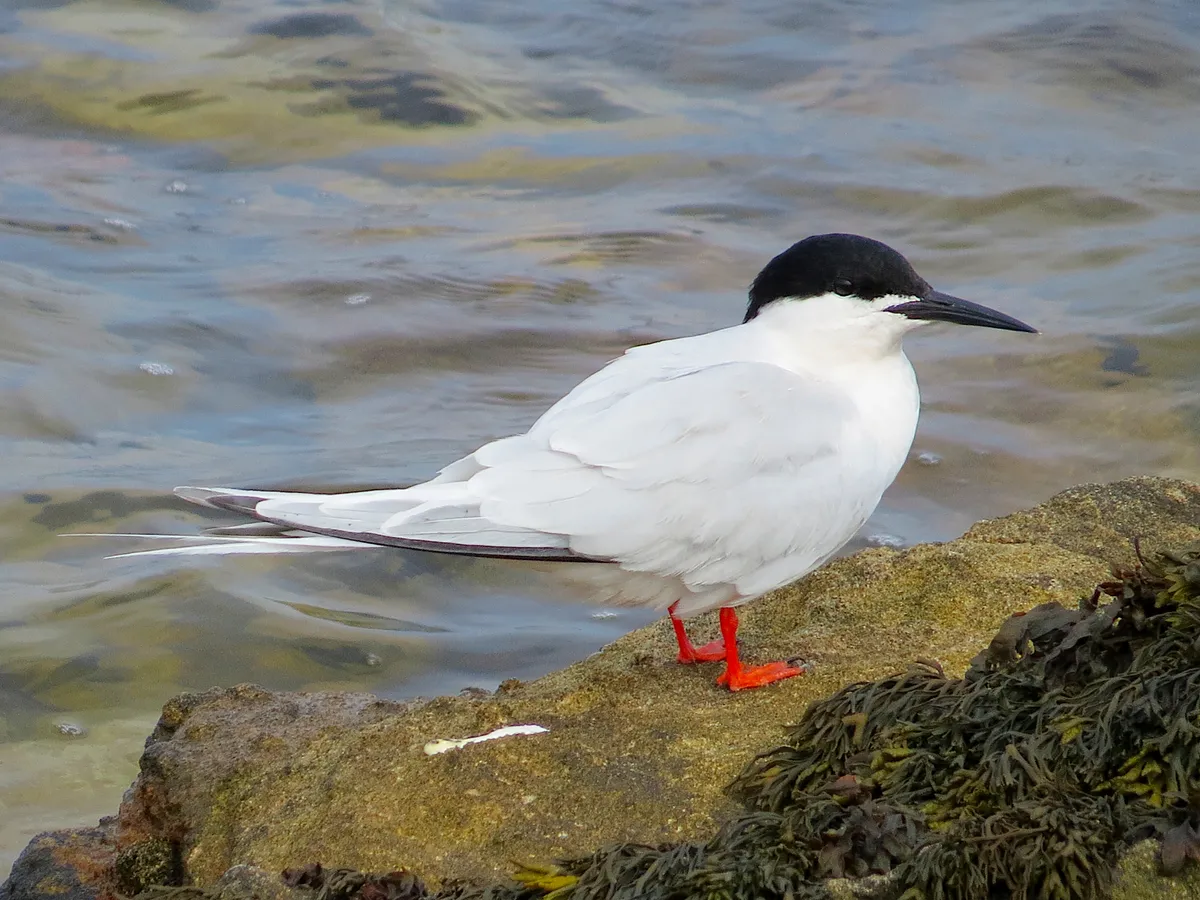
The roseate tern (Sterna dougallii) is a species of tern in the family Laridae. The genus name Sterna is derived from Old English "stearn", "tern", and the specific dougallii refers to Scottish physician and collector Dr Peter McDougall (1777–1814). "Roseate" refers to the bird's pink breast in breeding plumage.
Description
This is a small-medium tern, 33–36 cm (13–14 in) long with a 67–76 cm (26–30 in) wingspan, which can be confused with the common tern, Arctic tern, and the larger, but similarly plumaged, Sandwich tern. The thin sharp bill is black, with a red base which develops through the breeding season, and is more extensive (to fully red) in the tropical and southern hemisphere subspecies. It is shorter-winged and has faster wing beats than common or Arctic tern. The upper wings are pale grey and its under parts white, and this tern looks very pale in flight, like a small Sandwich tern, although the outermost primary flight feathers darken during the summer. The adults have very long, flexible tail streamers and orange-red legs. In summer, the underparts of adults take on the pinkish tinge which gives this bird its name. In winter, the forehead becomes white and the bill black. Juvenile roseate terns have a scaly appearance like juvenile Sandwich Terns, but a fuller black cap than that species.
Text from Wikipedia — Roseate tern, revision 1357173932, CC BY-SA 4.0, retrieved 2026-09-04. Encyclopedic text reused under CC BY-SA 4.0. Sentences about hunting or regulation are removed: on this site, the rule comes from Québec.ca.
Other names
French
English
Presence in Quebec
- Origin
- Indigène
- Occurrence
- Régulier
- Population status
- Reproducteur
- Certainty
- Confirmé
Conservation
Québec.ca
Official periods
Source: Québec.ca — tables reproduced as published (retrieved 2026-08-30).
Regulations change. Always check Québec.ca before hunting or trapping.
Where this data comes from
This species is listed in an official government dataset. The identification and status shown in the data sheet are reproduced from it.
Source: List of Quebec’s vertebrate wildlife (LFVQ) — Ministère de l’Environnement, de la Lutte contre les changements climatiques, de la Faune et des Parcs. File LFVQ_25_03_2026.csv, retrieved 2026-08-30 · CC BY 4.0.
Measurements, habitat, diet and reproduction are not shown: no official source is attached to them yet.