
No period published by Québec.ca
Québec.ca publishes no hunting or trapping period for this species. Check the official regulations.
Wikipedia
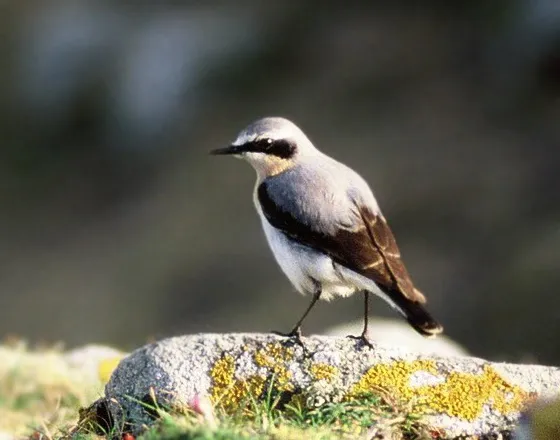
Traquet motteux
The northern wheatear or wheatear (Oenanthe oenanthe) is a small passerine bird in the Old World flycatcher family. It is the most widespread member of the wheatear genus Oenanthe in Europe and North and Central Asia. The northern wheatear is a migratory insectivorous species breeding in open stony country in Europe and east across the Palearctic with footholds in northeastern Canada and Greenland as well as in northwestern Canada and Alaska. It nests in rock crevices and rabbit burrows. All birds spend most of their winter in Africa.
Description
The northern wheatear is larger than the European robin at 14.5–16 cm (5.7–6.3 in) in length. The northern wheatear also has a wingspan of 26–32 cm and weighs 17–30 g. Both sexes have a white rump and tail, with a black inverted T-pattern at the end of the tail. The plumage of the summer male has grey upperparts, buff throat and black wings and face mask. In autumn it resembles the female apart from the black wings. The female is pale brown above and buff below with darker brown wings. The male has a whistling, crackly song. Its call is a typical chat chack noise, and the flight call is the same.
Text from Wikipedia — Northern wheatear, revision 1357474464, CC BY-SA 4.0, retrieved 2026-09-04. Encyclopedic text reused under CC BY-SA 4.0. Sentences about hunting or regulation are removed: on this site, the rule comes from Québec.ca.
Other names
French
English
Presence in Quebec
- Origin
- Indigène
- Occurrence
- Régulier
- Population status
- Reproducteur
- Certainty
- Confirmé
Conservation
Québec.ca
Official periods
Source: Québec.ca — tables reproduced as published (retrieved 2026-08-30).
Regulations change. Always check Québec.ca before hunting or trapping.
Where this data comes from
This species is listed in an official government dataset. The identification and status shown in the data sheet are reproduced from it.
Source: List of Quebec’s vertebrate wildlife (LFVQ) — Ministère de l’Environnement, de la Lutte contre les changements climatiques, de la Faune et des Parcs. File LFVQ_25_03_2026.csv, retrieved 2026-08-30 · CC BY 4.0.
Measurements, habitat, diet and reproduction are not shown: no official source is attached to them yet.