
No period published by Québec.ca
Québec.ca publishes no hunting or trapping period for this species. Check the official regulations.
Wikipedia
Troglodyte familier
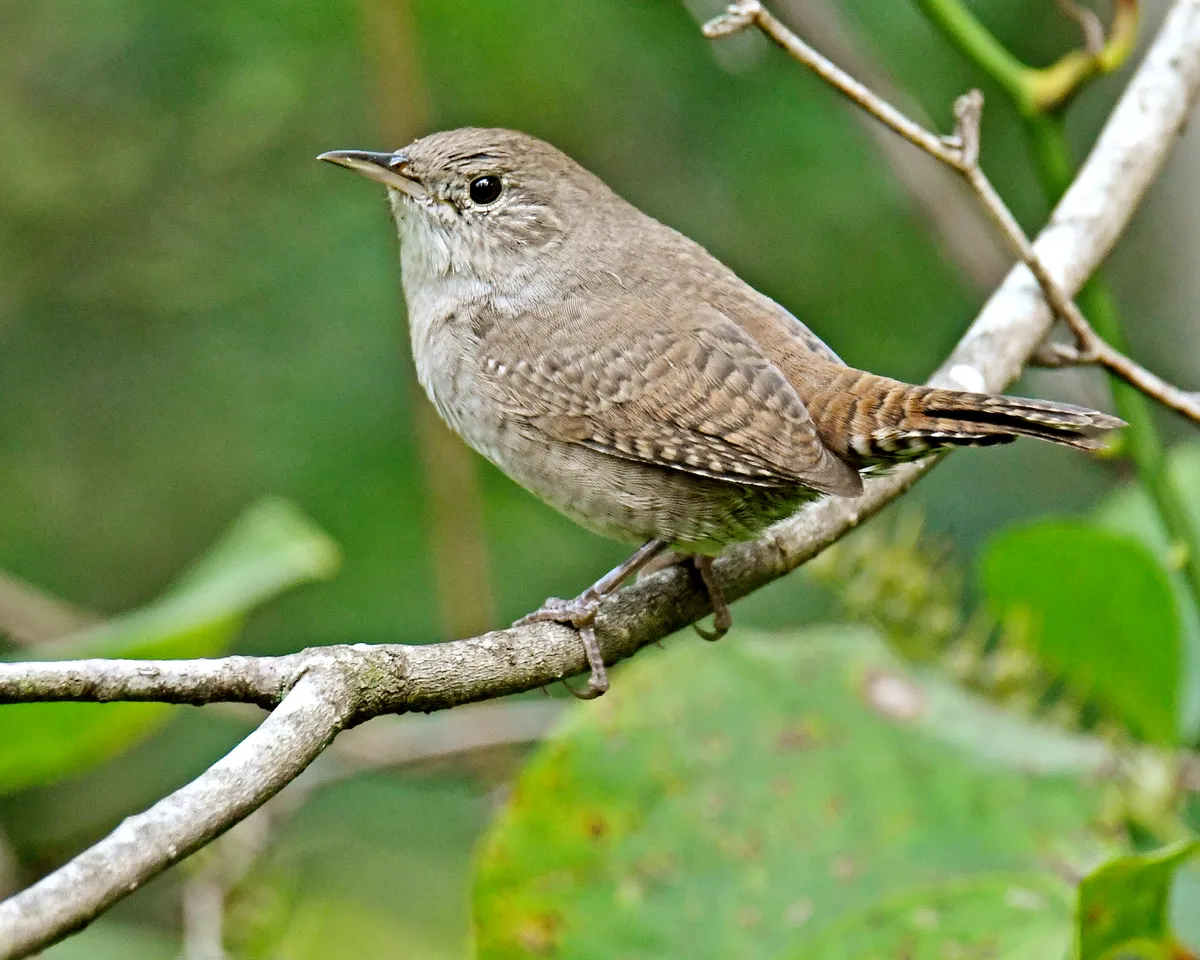
The northern house wren (Troglodytes aedon) is a very small passerine in the wren family Troglodytidae. It is found in southern Canada, the USA and Mexico. It occurs in most suburban areas in its range. It formerly included many subspecies resident in South America and in the Caribbean that are now considered as separate species.
Description
Adult northern house wrens are about 11 to 13 cm (4.3 to 5.1 in) long, with a 15 cm (5.9 in) wingspan and weigh about 10 to 12 g (0.35 to 0.42 oz). Among standard measurements, the wing chord is 4.7 to 5.3 cm (1.9 to 2.1 in), the tail is 3.9 to 4.4 cm (1.5 to 1.7 in), the culmen is 1.1 to 1.3 cm (0.43 to 0.51 in) and the tarsus is 1.6 to 1.8 cm (0.63 to 0.71 in). The subspecies vary greatly, with upper parts ranging from dull greyish-brown to rich rufescent-brown, and the underparts ranging from brown, over buff and pale grey, to pure white. All subspecies have blackish barring to the wings and tail, and some also to the flanks. All subspecies show a faint eye-ring and eyebrow and have a long, thin bill with a blackish upper mandible, and a black-tipped yellowish or pale grey lower mandible. The legs are pinkish or grey. The short tail is typically held cocked. This bird's rich bubbly song is commonly heard during the nesting season but rarely afterwards. There is marked variation in the song.
Text from Wikipedia — Northern house wren, revision 1363110582, CC BY-SA 4.0, retrieved 2026-09-04. Encyclopedic text reused under CC BY-SA 4.0. Sentences about hunting or regulation are removed: on this site, the rule comes from Québec.ca.
Other names
French
English
Presence in Quebec
- Origin
- Indigène
- Occurrence
- Régulier
- Population status
- Reproducteur
- Certainty
- Confirmé
Conservation
Québec.ca
Official periods
Source: Québec.ca — tables reproduced as published (retrieved 2026-08-30).
Regulations change. Always check Québec.ca before hunting or trapping.
Where this data comes from
This species is listed in an official government dataset. The identification and status shown in the data sheet are reproduced from it.
Source: List of Quebec’s vertebrate wildlife (LFVQ) — Ministère de l’Environnement, de la Lutte contre les changements climatiques, de la Faune et des Parcs. File LFVQ_25_03_2026.csv, retrieved 2026-08-30 · CC BY 4.0.
Measurements, habitat, diet and reproduction are not shown: no official source is attached to them yet.