
No period published by Québec.ca
Québec.ca publishes no hunting or trapping period for this species. Check the official regulations.
Wikipedia
Vanneau huppé
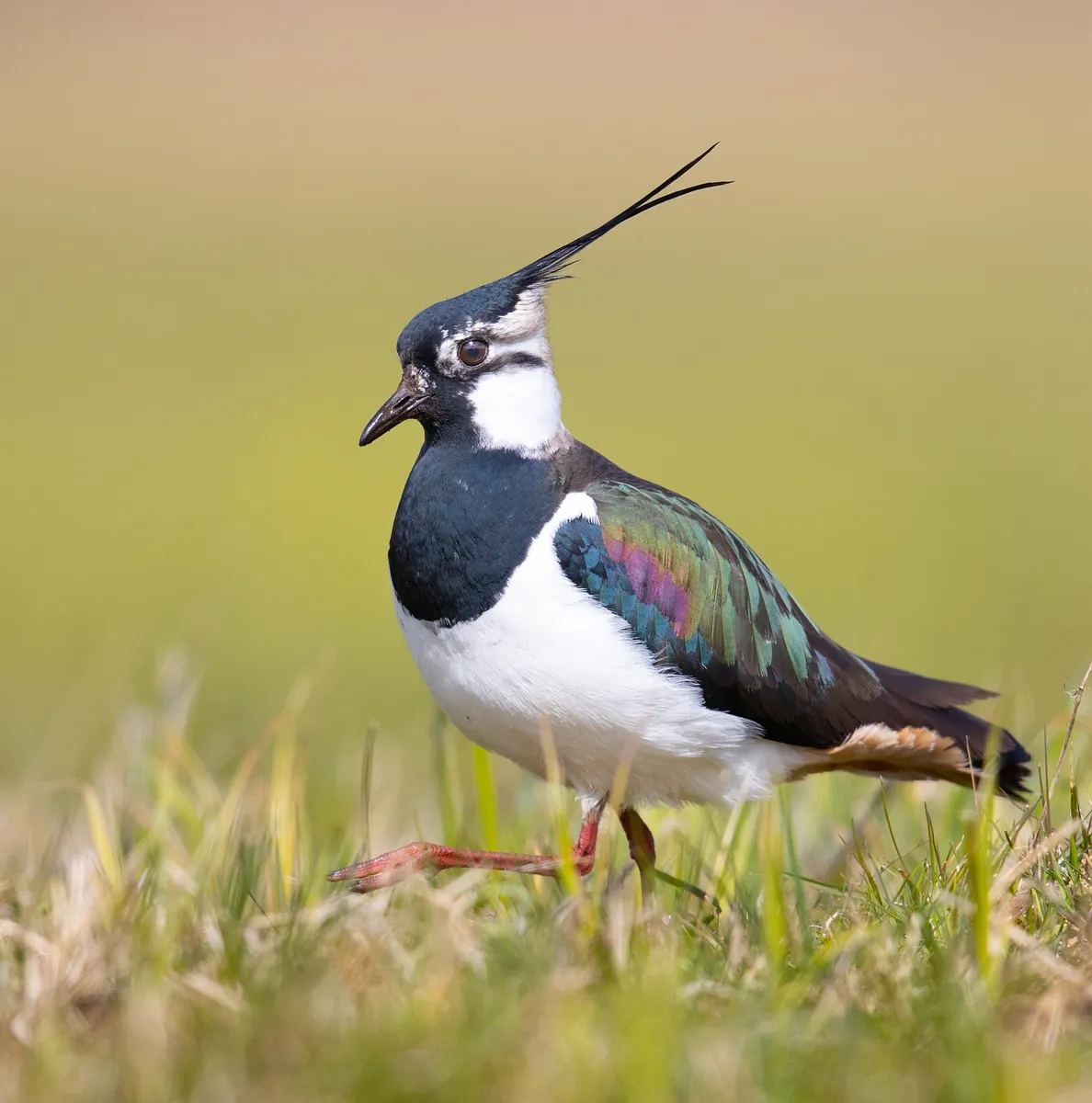
The northern lapwing (Vanellus vanellus), also known as the peewit or pewit, tuit or tewit, green plover, or (in Ireland and Great Britain) pyewipe or just lapwing, is a bird in the lapwing subfamily. It is common through temperate Eurosiberia.
Description
The northern lapwing is a 28–33 cm (11–13 in) long bird with a 67–87 cm (26–34 in) wingspan and a body mass of 128–330 g (4.5–11.6 oz). It has rounded wings and a crest. It is also the shortest-legged of the lapwings. Its plumage is mainly black and white, but its back is tinted green. The male has a long crest and a black crown, throat and breast, which contrast with an otherwise white face. Females and young birds have shorter crests and less distinct markings on their heads, but their plumage is otherwise quite similar. This is a vocal bird during the breeding season, with constant calling while the male performs his crazed tumbling display flight. The typical contact call is a loud, shrill "pee-wit" which gives them their alternative name of peewit. Displaying males usually make a wheezy "pee-wit, wit wit, eeze wit" during their display flight. These birds also make squeaking or mewing sounds.
Text from Wikipedia — Northern lapwing, revision 1359049934, CC BY-SA 4.0, retrieved 2026-09-04. Encyclopedic text reused under CC BY-SA 4.0. Sentences about hunting or regulation are removed: on this site, the rule comes from Québec.ca.
Other names
French
English
Presence in Quebec
- Origin
- Indigène
- Occurrence
- Accidentel/non régulier
- Population status
- Migrateur
- Certainty
- Confirmé
Conservation
Québec.ca
Official periods
Source: Québec.ca — tables reproduced as published (retrieved 2026-08-30).
Regulations change. Always check Québec.ca before hunting or trapping.
Where this data comes from
This species is listed in an official government dataset. The identification and status shown in the data sheet are reproduced from it.
Source: List of Quebec’s vertebrate wildlife (LFVQ) — Ministère de l’Environnement, de la Lutte contre les changements climatiques, de la Faune et des Parcs. File LFVQ_25_03_2026.csv, retrieved 2026-08-30 · CC BY 4.0.
Measurements, habitat, diet and reproduction are not shown: no official source is attached to them yet.