
Hunting periods published by Québec.ca
Official tables below — zones, gear and dates.
Wikipedia
Grenouille verte
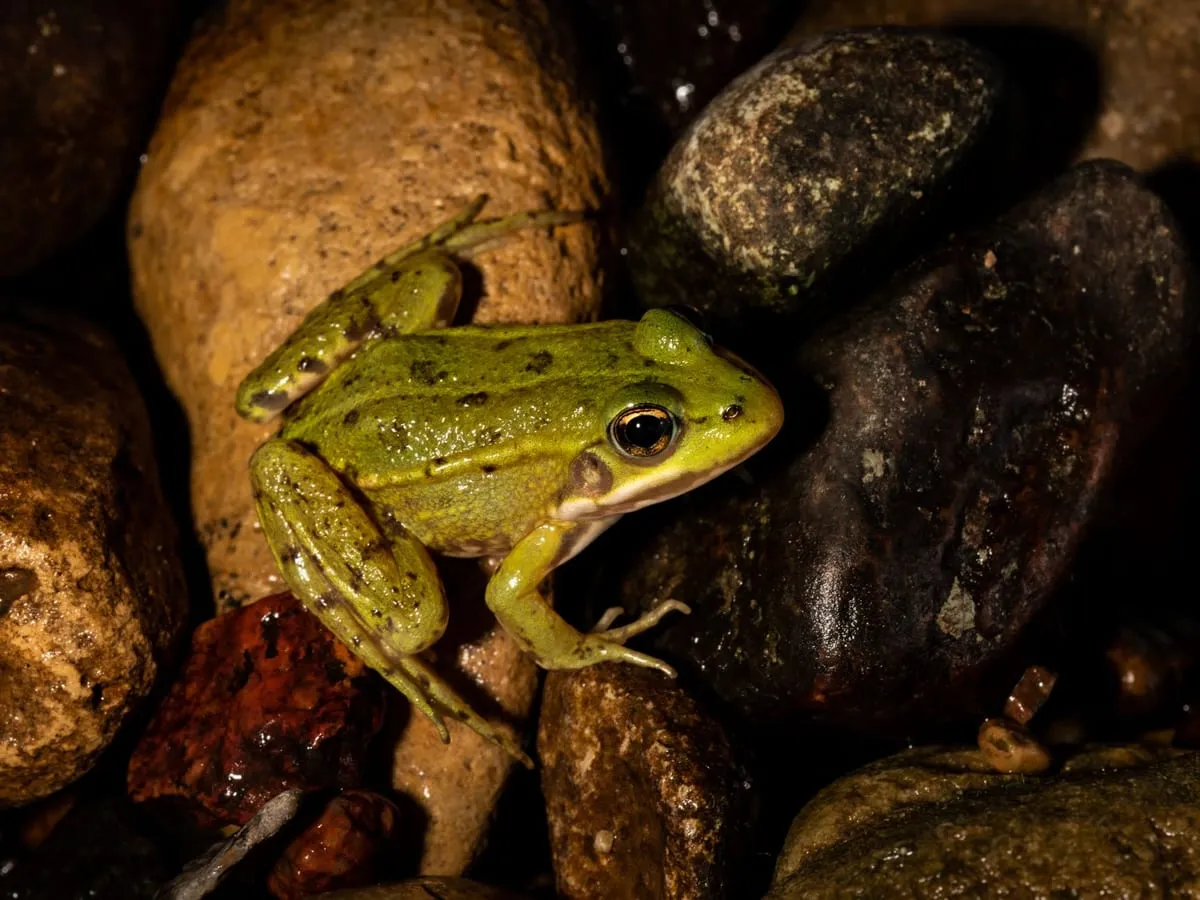
Lithobates clamitans or Rana clamitans, commonly known as the green frog, is a species of frog native to eastern North America. The two subspecies are the bronze frog and the northern green frog. These frogs, as described by their name, typically have varying degrees of green heads. These frogs display significant acts of territoriality, with males being the primary actors. Male green frogs use this technique against other male frogs in addition to other intruders that might have interest in nearing their territory. Territoriality also plays a role in mating, as females favor males who are strong in this field and exhibit strong mating calls. Male green frogs use four different types of breeding calls to attract potential female mates. Predators of the eggs of green frogs include beetles, water bugs, and water scorpions. Adult frogs are typically threatened by several types of birds.
Description
This species is a mid-sized true frog. Adult green frogs range from 5–10 cm (2.0–3.9 in) in body length (snout to vent, excluding the hind legs). The typical body weight of this species is from 28 to 85 g (0.99 to 3.00 oz). The sexes are sexually dimorphic in a few ways: mature females are typically larger than males, the male tympanum is twice the diameter of the eye, whereas in females, the tympanum diameter is about the same as that of the eye, and males have bright yellow throats. The dorsolateral ridges, prominent, seam-like skin folds that run down the sides of the back, distinguish the green frog from the bullfrog, which entirely lacks them. Green frogs usually have green heads while the body is brown, gray, or dark green. The green head can be more or less prominent on certain individuals, with some frogs only having green on the side of their heads while other frogs are green all the way down their back. The belly is white with black mottling. Male green frogs in breeding condition have yellow throats. Green frogs are darker colored on colder days to help absorb heat. Green frogs can sometimes be blue due to a genetic mutation known as axanthism that prevents the frog from producing yellow pigments (yellow and blue pigments together make the color green). Green frog tadpoles are olive green and iridescent creamy-white below. Metamorphosis can occur within the same breeding season or tadpoles may overwinter to metamorphose the next summer.
Diet
Green frogs will attempt to eat any mouth-sized animal they can capture, including insects, spiders, fish, crayfish, shrimp, other frogs, tadpoles, small snakes, slugs, and snails. Tadpoles will eat nearly anything organic, including diatoms, algae, and tiny amounts of small animals such as zooplankton (copepods and cladocerans).
Reproduction
Males become sexually mature at one year, females may mature in either two or three years.Males will establish breeding territories and maintain them throughout the entirety of the breeding period, with the season occurring from spring through summer, with variations depending on location and tempera
Text from Wikipedia — Lithobates clamitans, revision 1369236544, CC BY-SA 4.0, retrieved 2026-09-04. Encyclopedic text reused under CC BY-SA 4.0. Sentences about hunting or regulation are removed: on this site, the rule comes from Québec.ca.
Other names
English
Presence in Quebec
- Origin
- Indigène
- Occurrence
- Régulier
- Population status
- Toute l'année
- Certainty
- Confirmé
Conservation
Québec.ca
Official periods
Source: Québec.ca — tables reproduced as published (retrieved 2026-08-30).
Hunting
Leopard frog, green frog and bullfrog
| Zone where hunting is permitted | Gear | 2026 hunting season | 2027 hunting season |
|---|---|---|---|
| 1, 2, 3, 4, 5, 6, 7, 8, 9, 10, 11, 12, 13, 14, 15, 16, 18, 19 South, 20, 21, 26, 27, 28, 29 | Deadfall, barrier, stinger, dip net, pit, hook and hand | July 15 to November 15, 2026 | July 15 to November 15, 2027 |
Zones where hunting is permitted
Zone numbers listed in the tables above. Each links to the official zone map (PDF).
Regulations change. Always check Québec.ca before hunting or trapping.
Where this data comes from
This species is listed in an official government dataset. The identification and status shown in the data sheet are reproduced from it.
Source: List of Quebec’s vertebrate wildlife (LFVQ) — Ministère de l’Environnement, de la Lutte contre les changements climatiques, de la Faune et des Parcs. File LFVQ_25_03_2026.csv, retrieved 2026-08-30 · CC BY 4.0.
Measurements, habitat, diet and reproduction are not shown: no official source is attached to them yet.